Brand Value vs. Resale Value: Why This Article Uses Two Rankings, Not One
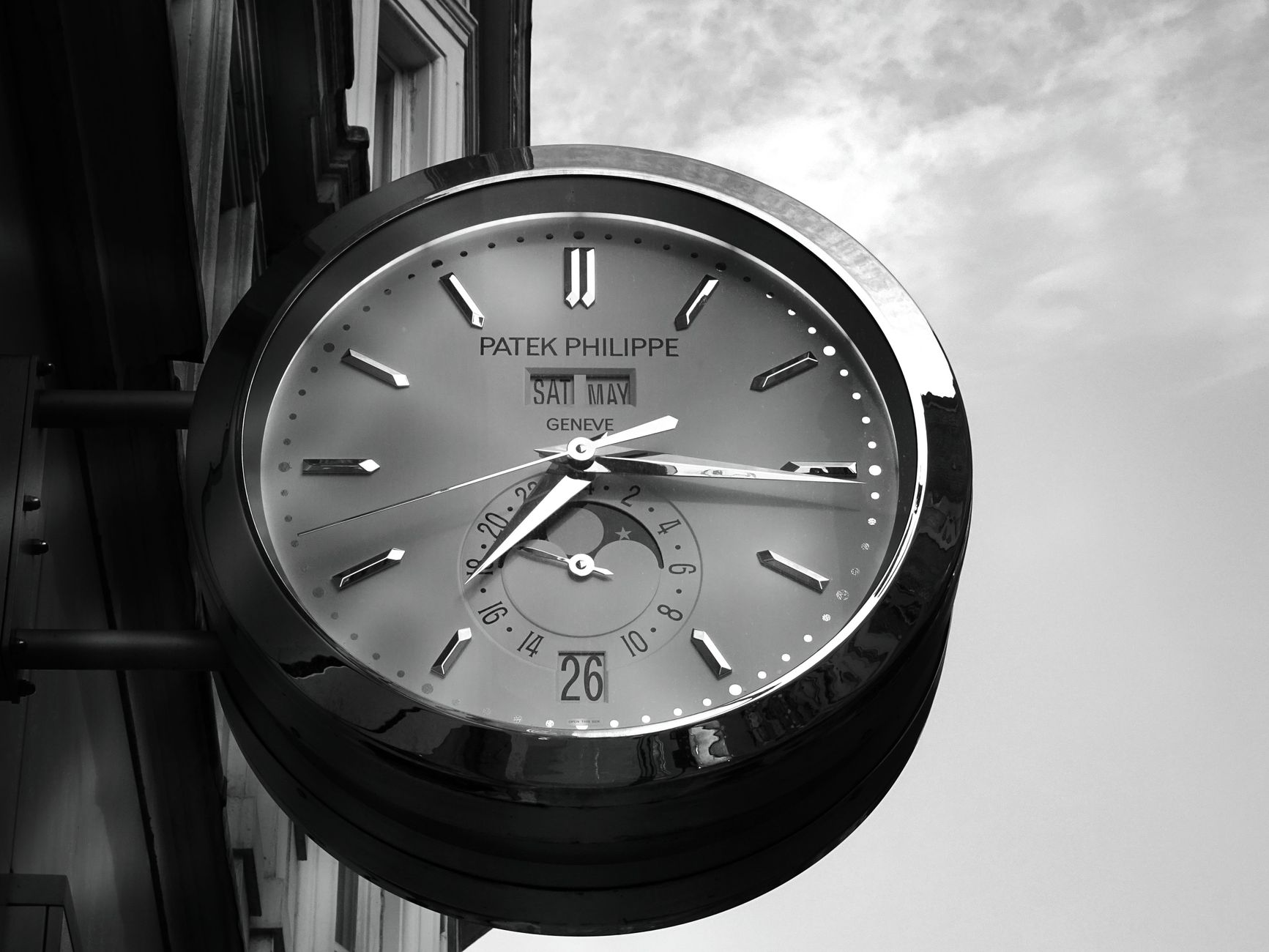
Brand value and resale value measure different things and answer different questions. Brand value, as calculated by Brand Finance, estimates what a brand name is worth to its parent company based on revenue, market share, and marketing strength. Resale value, tracked by firms like Rebag and The RealReal, measures what secondhand buyers actually pay for a specific piece relative to its original retail price. A collector deciding whether a Birkin or a Daytona holds value needs the second metric, not the first.
This is an update to our previous brand rankings page, which covered the 2026 edition of this analysis. The methodology gap between the two data types has only widened this year, which is exactly why we’re separating them rather than folding them into one “top luxury brands” list, the way most outlets do.
Brand Value ≠ Resale Value: Brand value tells you how large and commercially dominant a company is. Resale value tells you whether a specific product retains buyer demand years after purchase. Porsche can top the first list and never appear on the second, because Brand Finance’s ranking blends fashion houses with automakers, while resale trackers follow individual bags, watches, and jewelry pieces.
The World’s Most Valuable Luxury and Premium Brands (Brand Finance Rankings)
Brand Finance’s Luxury & Premium 50 is the most widely cited brand-value ranking in the sector, published annually with methodology that weighs revenue, marketing investment, and brand strength scores. The 2025 and 2026 editions are separate reports with distinct data sets, not a single running tally, so year-over-year comparisons require care.
In the 2025 edition, Brand Finance placed Porsche at #1 with a brand value of $41.145 billion, ahead of Chanel at #2 ($37.913 billion) and Louis Vuitton at #3 ($32.917 billion). Hermès ranked #4 at $19.912 billion, followed by Rolex at #5 ($18.772 billion), Dior at #6 ($17.287 billion), Cartier at #7 ($15.737 billion), Ferrari at #8 ($14.420 billion), Gucci at #9 ($11.358 billion), and Guerlain rounding out the top ten at $7.693 billion.
The later 2026 Luxury & Premium 50, published in September 2026, kept Porsche at #1 for a ninth consecutive year, though its brand value declined 15% to $35.2 billion. Chanel held #2 at $34.3 billion, down 9%, and Louis Vuitton remained #3 at $28.8 billion. These figures shouldn’t be read as a straight decline from the 2025 numbers above; Brand Finance revises methodology and market inputs between editions, so the 2025 and 2026 reports are best treated as two independent snapshots rather than points on a continuous line.
| Rank | Brand (2025 Edition) | Brand Value | Brand (2026 Edition) | Brand Value |
|---|---|---|---|---|
| 1 | Porsche | $41.145B | Porsche | $35.2B |
| 2 | Chanel | $37.913B | Chanel | $34.3B |
| 3 | Louis Vuitton | $32.917B | Louis Vuitton | $28.8B |
| 4 | Hermès | $19.912B | , | , |
| 5 | Rolex | $18.772B | , | , |
Sources: Brand Finance’s Luxury & Premium 50 2025 ranking, as reported via Brandirectory; Brand Finance’s 2026 Luxury & Premium 50 press release.
Chanel and the Apparel-Specific Ranking
Chanel’s status as the world’s most valuable apparel brand comes from a category-specific Brand Finance ranking limited to apparel companies, not the broader luxury-and-premium list that includes automakers. In 2026, Chanel retained the #1 apparel spot for a second consecutive year at $34.3 billion.
This distinction matters for anyone quoting these rankings casually. Porsche and Ferrari sit above Chanel and Hermès on the combined luxury-and-premium list because that list pools automotive, fashion, and other premium categories into one scale. Neither company competes with Chanel in handbags, ready-to-wear, or leather goods, so treating Porsche’s #1 overall rank as evidence it outranks Chanel in fashion misreads the data. Brand Finance’s separate apparel ranking, where Chanel leads French brands with a combined $120.7 billion in apparel brand value across the category, is the more relevant comparison for readers thinking about fashion houses specifically.
The Luxury Market Backdrop: What Bain and Altagamma’s Data Shows
Bain & Company and Fondazione Altagamma’s joint research tracks the size and trajectory of the global personal luxury goods market, giving context to the brand-value and resale figures above by showing whether the overall category is expanding or contracting. Their 2026 report found the global personal luxury goods market reached approximately €358 billion in 2025, down from €364 billion in 2024 at current exchange rates, though up 1% at constant exchange rates once currency effects are stripped out.
Bain and Altagamma project the market growing 2% to 4% in 2026, reaching an estimated €365 billion to €373 billion. That modest growth outlook, paired with Brand Finance’s reported declines for Porsche and Chanel in the 2026 edition, suggests a market that’s stabilizing rather than contracting sharply, but is no longer delivering the outsized growth seen in the years immediately following 2021. For readers holding luxury assets, this backdrop is a reminder that brand-level revenue softness doesn’t automatically translate into resale-price softness for specific pieces, which is a separate, model-driven market.
Which Brands Actually Hold Their Value on Resale
Resale retention data answers a narrower and, for collectors, more useful question: what percentage of original retail price does a specific brand’s product command on the secondary market today? Rebag’s Clair Report, now in its sixth annual edition, is one of the few data sets that tracks this systematically across thousands of transactions.
The 2026 Clair Report found Hermès products retaining an average of 138% of original retail value, the highest documented figure in the report. Goyard followed at 132%, Van Cleef & Arpels at 112%, and Rolex and Miu Miu tied at 104%. Retention above 100% means the average resold item sold for more than its original retail price, a phenomenon largely driven by deliberate production scarcity (Hermès) and sustained waitlist demand (Van Cleef & Arpels, Rolex).
Documented Resale Retention (Rebag Clair Report, 2026): Hermès 138% • Goyard 132% • Van Cleef & Arpels 112% • Rolex 104% • Miu Miu 104%. These are historical averages across the brand’s product line, not guarantees for any individual item.
At the model level, the standouts are more dramatic. The Hermès Kelly Mini II reportedly reached 282% of its original retail price on resale, and the Birkin Sellier reached approximately 183%, according to the same Rebag data. These figures shouldn’t be generalized into a brand-wide promise: a specific bag’s condition, color, hardware, leather type, and waitlist scarcity at the time of resale all drive the outcome, and plenty of Hermès pieces sell below these standout figures. What the data does support is that Hermès, Goyard, and Van Cleef & Arpels have the strongest documented track record among major luxury houses.
What Resale Demand Data Adds (and Doesn’t Prove)
The RealReal’s 2026 Resale Report tracks something different again: search volume and buyer attention on its platform, not price retention. Its top 10 most-searched brands for 2026 were Chanel, Louis Vuitton, Prada, Gucci, Miu Miu, The Row, Hermès, Saint Laurent, Bottega Veneta, and Balenciaga.
Search rank measures interest, not investment return. A brand can top the most-searched list because shoppers are hunting for entry-level pieces at a discount, which says nothing about whether those pieces will later resell above retail. This is where a lot of consumer coverage conflates demand with value, and it’s worth being precise about the underlying numbers, because different outlets have reported different figures from the same RealReal data set.
Haute Living’s coverage of the report cited the Gucci Jackie’s average sale price rising from $294 in 2016 to $3,012 in 2026, roughly a tenfold increase over a decade. WatchPro’s separate coverage of the same RealReal findings attributed that $294-to-$3,012 trajectory to the Fendi Baguette instead, and reported the Gucci Jackie rising more modestly, from roughly $360 to $1,100 over the same period. Because the two outlets report different figures against the same underlying data, we’re citing each figure to the outlet that reported it rather than merging them into a single number. Other long-term price gains cited in the same reporting include the Saint Laurent Mombasa, Fendi Peekaboo, Celine Luggage, Dior Lady Dior, and Prada Galleria, though exact multiples vary by source and should be checked against the original report before being used in any valuation discussion.
A Practical Two-Track Ranking for Readers
Put side by side, the brand-value leaders and the resale-retention leaders overlap less than most “top luxury brands” content implies. The table below separates the two tracks explicitly, which is the only defensible way to present this data to a reader deciding whether a brand name and a resale-ready asset are the same thing.
| Brand | Brand-Value Position | Resale Evidence | Editorial Interpretation |
|---|---|---|---|
| Chanel | #2 overall (2026), #1 apparel | Not in Rebag’s top retention tier | Dominant brand scale; resale performance is strong but not the category leader |
| Louis Vuitton | #3 overall (2026) | Not in Rebag’s top retention tier | Largest brand by revenue influence; resale is solid, not standout |
| Hermès | #4 (2025 edition) | 138% retention, top of Rebag’s list | Best combination of brand scale and documented resale strength |
| Rolex | #5 (2025 edition) | 104% retention | Watch-category benchmark for resale reliability |
| Dior | #6 (2025 edition) | High RealReal search volume | Strong demand signal; retention data less prominent than Hermès or Rolex |
| Cartier | #7 (2025 edition) | Not separately broken out | Jewelry-house brand strength; resale strength concentrated in specific lines |
| Goyard | Not ranked in top 10 by Brand Finance | 132% retention | Small brand footprint, exceptional resale retention |
| Van Cleef & Arpels | Not ranked in top 10 by Brand Finance | 112% retention | Waitlist scarcity drives resale premiums well above brand-value rank |
| Miu Miu | Not ranked in top 10 by Brand Finance | 104% retention; high RealReal search volume | Rare case where demand and retention both point the same direction |
| Gucci | #9 (2025 edition) | Jackie price gains reported, magnitude disputed between outlets | Large brand; specific bag-level gains are real but source figures vary |
The pattern that emerges: Hermès is the rare brand that performs well on both tracks. Goyard and Van Cleef & Arpels punch far above their brand-value ranking on resale. Porsche, Ferrari, and Louis Vuitton dominate brand value largely on scale and revenue, which is a different accomplishment than resale reliability on a specific handbag or watch.
How to Evaluate a Luxury Asset’s Resale Value Before You Buy, or Borrow Against It
If you’re evaluating a watch, handbag, or jewelry piece as a potential store of value, or as collateral for a loan, brand-value rankings are the wrong tool. Start with model-specific resale data: has this exact reference, size, and condition tier historically sold above or below retail, and over what time horizon? Rebag’s Clair Report and The RealReal’s resale reporting are useful starting points, but neither source guarantees future performance, and both report averages that mask significant piece-to-piece variation.
Condition, provenance, and documentation matter more at the individual-asset level than brand prestige alone. A Birkin with original box, dust bags, and full purchase documentation will typically outperform an identical bag missing those elements. A Rolex with a complete service history and original papers commands more than one without. These details are what a lender or appraiser actually evaluates, not the brand’s overall Brand Finance ranking.
None of this makes luxury assets a risk-free store of value. Resale markets shift, individual pieces can be damaged or lost, and past retention percentages, including the standout Hermès figures cited above, are historical averages, not forward guarantees. Treat any luxury asset the way you’d treat any illiquid holding: understand what drives its value, document it properly, and know how you’d access liquidity from it if the need arose without necessarily selling it outright.
If you own watches, jewelry, handbags, or fine art with documented resale value and want to understand how that value could be used as collateral for a loan, without selling the piece, Borro can provide a personalized assessment.
Frequently Asked Questions
What’s the difference between brand value and resale value?
Brand value estimates a company’s overall commercial worth, based on revenue, market share, and marketing strength, as calculated by firms like Brand Finance. Resale value measures what secondhand buyers actually pay for a specific product relative to its original retail price, as tracked by firms like Rebag and The RealReal. The two metrics can move independently and shouldn’t be treated as interchangeable.
Why does Porsche rank above Chanel and Hermès on some luxury brand lists?
Porsche topped Brand Finance’s 2025 and 2026 Luxury & Premium 50 rankings because that list combines automotive brands with fashion and jewelry houses on a single commercial-value scale. Porsche’s revenue and market share as a global automaker place it above fashion brands on that specific ranking, which doesn’t reflect resale performance in handbags, apparel, or jewelry.
Which luxury brands have the best documented resale retention?
According to Rebag’s 2026 Clair Report, Hermès led with 138% average retention of original retail value, followed by Goyard at 132%, Van Cleef & Arpels at 112%, and Rolex and Miu Miu tied at 104%. These are brand-wide historical averages and don’t guarantee the resale outcome for any individual item.
Does a brand appearing on The RealReal’s most-searched list mean it holds value well?
No. The RealReal’s most-searched brand list measures buyer search volume and attention on its platform, not price retention or investment return. A brand can rank high in searches because of general popularity or discount-hunting behavior, independent of whether specific pieces resell above or below original retail price.
Is Chanel the most valuable luxury brand overall?
Chanel is the world’s most valuable apparel brand specifically, according to Brand Finance’s 2026 apparel-category ranking, valued at $34.3 billion. On Brand Finance’s broader Luxury & Premium 50 list, which includes automotive brands, Chanel ranks #2 behind Porsche as of the 2026 edition.
Can I use a luxury watch, handbag, or jewelry piece as collateral for a loan?
Specialty asset-based lenders, including Borro, offer loans secured against watches, jewelry, handbags, and fine art without requiring the owner to sell the piece. Loan terms, eligibility, and valuations vary by asset and lender. Borro is not a bank, and this information does not constitute financial advice; contact a lender directly for a personalized quote.
Are luxury resale figures like the Hermès Birkin’s 183% retention typical for every bag?
No. Model-level figures such as the Birkin Sellier’s approximate 183% retention or the Kelly Mini II’s 282% retention, both reported in Rebag’s 2026 Clair Report, reflect specific, often rare configurations. Condition, documentation, color, and hardware significantly affect individual resale outcomes, and many pieces from the same brand sell below these standout figures.
Sources
- Brand Finance, Luxury & Premium 50 2025 ranking, as reported via Brandirectory’s “Luxury & Premium Reports” (2025)
- Brand Finance, 2026 Luxury & Premium 50 press release (2026)
- Brand Finance, “French Brands Lead Global Apparel Ranking With $120.7 Billion in Brand Value, Led by Chanel,” press release (2026)
- Bain & Company and Fondazione Altagamma, global personal luxury goods market press release (2026)
- Rebag, Clair Report, sixth annual edition, as reported by Designer Signals, “US Luxury Resale Market Signals” (2026)
- The RealReal, 2026 Resale Report, as reported by Haute Living, “The RealReal 2026 Resale Report Reveals the State of Luxury” (2026)
- The RealReal, 2026 Resale Report findings, as separately reported by WatchPro, “The RealReal Says Second-hand Luxuries Are First Choice” (2026)
This article is for informational purposes only and does not constitute financial advice. Loan terms, eligibility, and asset valuations vary by item and applicant. Contact Borro directly for a personalized loan quote. Borro is not a bank.