The Depreciation Problem: What Happens to a Car the Day You Drive It Off the Lot
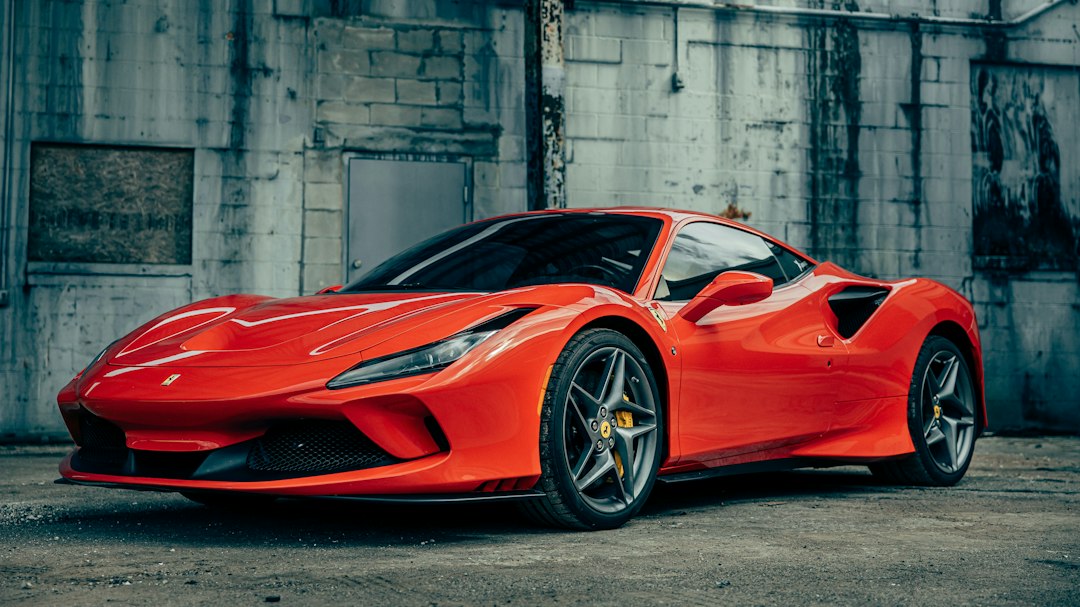
A new car loses value the moment it’s titled in your name. Insurance actuaries have priced this into policies for decades, and every trade-in appraisal you’ve ever received confirms it: the vehicle is worth measurably less than what you paid, often before you’ve put a hundred miles on the odometer. Even the exceptions, a Ferrari F40 or a well-documented Porsche 911 R, are exceptions precisely because they stopped behaving like normal cars and started behaving like collectibles.
That distinction matters. Most luxury purchases, cars included, are consumption. You buy them to use them, and use erodes value. The question worth asking as a holder of significant assets isn’t whether a car depreciates (it does), but whether every luxury purchase has to. A small, specific category of Hermès handbags suggests the answer is no, provided you understand exactly which bags, and why.
The Birkin Exception: What the Data Actually Shows
Baghunter’s often-cited “Hermes Birkin Values Research Study” found that Birkin bags appreciated at an average annual rate of 14.2% between 1980 and 2015, a figure The Guardian corroborated in 2016 and Arthnova referenced again in 2026 coverage of the secondary market. That’s a 35-year window, which is longer than most people hold any single asset, and it spans multiple recessions, currency crises, and at least one global financial collapse.
Sotheby’s pricing data gives you the current retail-to-resale spread that makes this concrete. A classic leather Birkin 25 starts at $13,500 retail as of 2026; the Birkin 30 and Birkin 35 retail at $14,900 and $16,300 respectively. On the secondary market, pristine models frequently exceed $30,000 depending on rarity, meaning a bag can trade for double its retail price within a matter of years, according to New York Post reporting from December 2025. One documented Birkin sold at Sotheby’s for $10.1 million in July 2025, and rare examples like the Himalaya Birkin have set records near $500,000 at auction, per Arthnova’s 2026 market review.
None of this means the Birkin in your closet is worth six figures. It means the ceiling for the right bag, in the right condition, with the right provenance, is far higher than most owners assume, and the floor rarely collapses the way it does with a depreciating car.
Beating Gold and the S&P 500, With Real Caveats
The comparative numbers are what get a wealth manager’s attention. Baghunter’s study puts the Birkin’s 14.2% average annual appreciation ahead of the S&P 500’s 8.7%, gold’s 1.9%, and London real estate’s 11.6% over comparable periods. Dram Finance’s research on “The Birkin Paradox” adds a decade-scale data point: Birkin bags appreciated 92% on the resale market over the last ten years, outpacing Hermès’s own retail price growth of 43% over the same stretch. Resale platform FashioNica data, cited by the New York Post in March 2026, shows luxury handbags rising nearly 300% between 2022 and 2025, a period defined by tariffs, inflation, and rising interest rates that hammered more conventional assets.
A Rebag report cited by CNBC in March 2025 found designer handbags surpassed other collectible categories for the first time, which is part of why analysts started treating them as a legitimate slice of the alternative-asset conversation rather than a lifestyle purchase.
The numbers, side by side: Birkin (1980-2015 avg.) 14.2% annually vs. S&P 500 8.7%, gold 1.9%, London real estate 11.6% (Baghunter study, cited by The Guardian, 2016).
Here’s the caveat this audience will demand, and correctly so: these figures describe a curated subset of the Birkin market, not handbags as a category. Baghunter’s sample skews toward rare skins and discontinued colorways. Your average leather Birkin bought at retail and carried daily will not track this curve. Treat the 14.2% as evidence that a specific tier of asset can outperform, not as a return you should underwrite.
Not Every Birkin Is an Asset: Rarity, Condition, and Material Matter
Sotheby’s breakdown of what actually drives Birkin pricing is the closest thing to an appraisal framework this market has. Exotic skins (crocodile, alligator, ostrich) command premiums that dwarf standard calfskin. Hardware matters: gold, palladium, and the rarer “So Black” or diamond-encrusted variants move a bag into a different pricing tier entirely. Hermès’s own waitlist scarcity, the brand deliberately limits production and controls distribution through in-store relationships rather than open sale, is itself a price driver, because it manufactures the very rarity collectors pay for.
Condition is non-negotiable. A bag with structural wear, cracked corners, or a compromised interior loses collector-grade status regardless of skin or hardware. Documentation (original receipt, box, dust bag, and any Hermès service records) separates a bag that trades at a premium from one that trades at a discount to a comparable example without paperwork. Privé Porter and other specialist resellers price provenance explicitly into their listings for exactly this reason.
The practical takeaway: a Togo leather Birkin 30 in gold hardware that you bought at retail and use weekly is a beautiful bag. It is not the asset Baghunter’s study is describing. The asset class lives at the intersection of rare skin, rare hardware, mint condition, and complete documentation, and that intersection is a small fraction of Hermès’s total handbag production.
The Expert Pushback: Why Financial Advisors Urge Caution
Fortune’s May 2025 reporting on the trend, headlined around Gen Z women being “sold a risky dream,” quotes financial experts calling the framing of handbags as a straightforward investment “nothing short of misleading” and potentially dangerous for buyers without market knowledge. The concern isn’t that the appreciation data is fabricated. It’s that headline statistics get stripped of their caveats and marketed to buyers who then overpay for ordinary bags expecting extraordinary returns.
New York Post coverage in March 2026 struck a similar note even while reporting the strong FashioNica resale numbers: experts urged caution about treating handbags as a bond substitute or a core portfolio holding. The legitimate argument for handbags in a diversification context is narrower and more defensible: a small allocation to genuinely rare, well-documented pieces can behave as a low-volatility asset with low correlation to public equities, which is a real diversification benefit for a portfolio that’s otherwise heavy in stocks, real estate, and business equity. That’s a different claim than “handbags outperform the market,” and it’s the one a fiduciary can actually stand behind.
For a $5M+ liquid net worth household, the sensible read is this: a Birkin bought at retail is not a hedge, and a rare Birkin bought at the right price with the right documentation is a legitimate, illiquid, low-correlation holding, similar in character to a fine watch or a numbered print. It deserves a place in the alternative-assets conversation, not a starring role in it.
Liquidity Without Liquidation: The Smarter Way to Use an Appreciating Asset
Once you accept that a rare Birkin (or a Kelly, or a comparable Hermès piece) can genuinely function as appreciating collateral, the next question is what to do with that fact. Selling captures the gain but ends it, and it puts you back in the market to reacquire a comparable piece at whatever the current premium happens to be. Letting the asset sit in a safe generates no return on the capital tied up in it. Neither option is capital-efficient for someone who has other uses for liquidity, a business opportunity, a tax payment, a bridge before a liquidity event.
This is where asset-backed lending fits the picture. Borro’s model lets you borrow against a Birkin, a comparable luxury handbag, a fine watch, jewelry, art, or a luxury vehicle, using the asset itself as collateral rather than selling it. You retain ownership and any future appreciation, and you access short-term capital without triggering a sale in a market where, per the data above, you might be leaving real upside on the table. It’s the same logic private banks apply to securities-backed lines of credit, adapted to an asset class that traditional banks are typically unequipped to underwrite or store.
Have a rare Birkin, Kelly, watch, or luxury vehicle you’d rather borrow against than sell?
Loan terms depend entirely on the specific piece, its documentation, and current market comparables, so no lender should quote you a number before an actual appraisal. What you should expect going in is that the same criteria driving resale value (rarity, condition, provenance) are the criteria that determine what a lender will advance against the piece.
How to Evaluate Whether Your Bag (or Any Luxury Asset) Qualifies
Before assuming any luxury handbag belongs in the same conversation as the Baghunter data, run it through the criteria that Sotheby’s and specialist resellers like Prive Porter actually use. Model matters first: Birkin and Kelly bags dominate the appreciation data; most other Hermès lines, and virtually all other brands, do not show comparable resale performance. Skin and hardware come next, exotic leathers and rare hardware finishes separate collector pieces from everyday luxury goods. Condition has to be genuinely excellent, not “gently used.” Documentation, original receipt, box, dust bag, and any service history, should be complete.
Provenance and waitlist status round out the picture: a bag acquired through Hermès’s controlled in-store allocation process, with a documented purchase history, generally carries more credibility with buyers and lenders than one with an unclear chain of ownership. If your bag checks most of these boxes, it’s worth having appraised as a potential asset rather than simply insured as a personal item. If it checks few of them, it’s still a beautiful bag, just not the one the appreciation statistics are describing.
Frequently Asked Questions
Do all Hermès Birkin bags appreciate in value?
No. Appreciation data such as Baghunter’s 14.2% average annual figure (1980-2015) applies to a curated subset of rare Birkins, typically exotic skins, rare hardware, and excellent condition with documentation. Standard leather Birkins bought and used at retail generally do not track this performance and often resell below retail price.
How does a Birkin’s appreciation compare to gold or the S&P 500?
Baghunter’s study found Birkins appreciated an average of 14.2% annually from 1980 to 2015, versus 8.7% for the S&P 500, 1.9% for gold, and 11.6% for London real estate over comparable periods, according to reporting corroborated by The Guardian in 2016. These figures describe a rare, high-condition subset of Birkins, not the broader handbag market.
What makes a Birkin bag “investment grade”?
Investment-grade Birkins typically combine rare exotic skins (crocodile, alligator, ostrich), premium or rare hardware finishes, mint condition with no structural wear, and complete original documentation including receipt, box, and dust bag. Sotheby’s pricing analysis identifies these factors as the primary drivers of secondary-market premiums.
Why do financial experts caution against treating handbags as investments?
Fortune’s May 2025 reporting quoted financial experts describing the marketing of handbags as straightforward investments as potentially misleading, particularly for buyers without collectibles market knowledge. The concern is that headline appreciation statistics apply to a narrow, rare subset of bags, not typical retail purchases, leading buyers to overpay expecting comparable returns.
Can I borrow money against a Birkin bag instead of selling it?
Asset-backed lenders, including Borro, offer loans secured by luxury handbags, watches, jewelry, art, and vehicles, allowing owners to access liquidity without selling the asset. Loan terms depend on the specific item’s documentation, condition, and appraised value, and vary by lender. This is not guaranteed financing and requires individual appraisal.
Is a Birkin a better asset than a luxury car?
Cars generally begin depreciating immediately after purchase, with rare exceptions among limited-production collectible vehicles. A narrow category of rare, well-documented Birkins has shown appreciation in specific studies and auction results, but this applies to a curated subset of handbags, not luxury goods broadly, and past performance does not guarantee future results.
What is the risk of relying on handbag appreciation data?
The primary risk is applying rare-asset performance data to typical purchases. Studies like Baghunter’s focus on exceptional Birkins with specific skins, hardware, and provenance. Fortune and other financial media have warned that treating this data as representative of handbags generally can lead to overpaying or misallocating capital away from more liquid, diversified holdings.
Sources
- Baghunter, “Hermes Birkin Values Research Study” (cited by The Guardian, 2016)
- The Guardian, 2016 coverage of Birkin bag appreciation data
- Arthnova, “Rare Birkin Bags and the Secondary Market,” 2026
- Sotheby’s, “What Influences an Hermès Birkin Bag Price,” 2026
- Dram Finance, “The Birkin Paradox and What It Means for Collectibles Investors”
- New York Post, “Birkins over Bonds!” March 10, 2026
- New York Post, December 15, 2025 coverage of Birkin resale premiums
- CNBC, March 22, 2025, Rebag handbag resale report coverage
- Fortune, “Gen Z women are being sold a risky dream,” May 4, 2025
This article is for informational purposes only and does not constitute financial advice. Loan terms, eligibility, and asset valuations vary. Contact Borro directly for personalized loan quotes. Borro is not a bank.