What Is a Birkin Loan? (And Why Hermès Bags Qualify as Collateral)
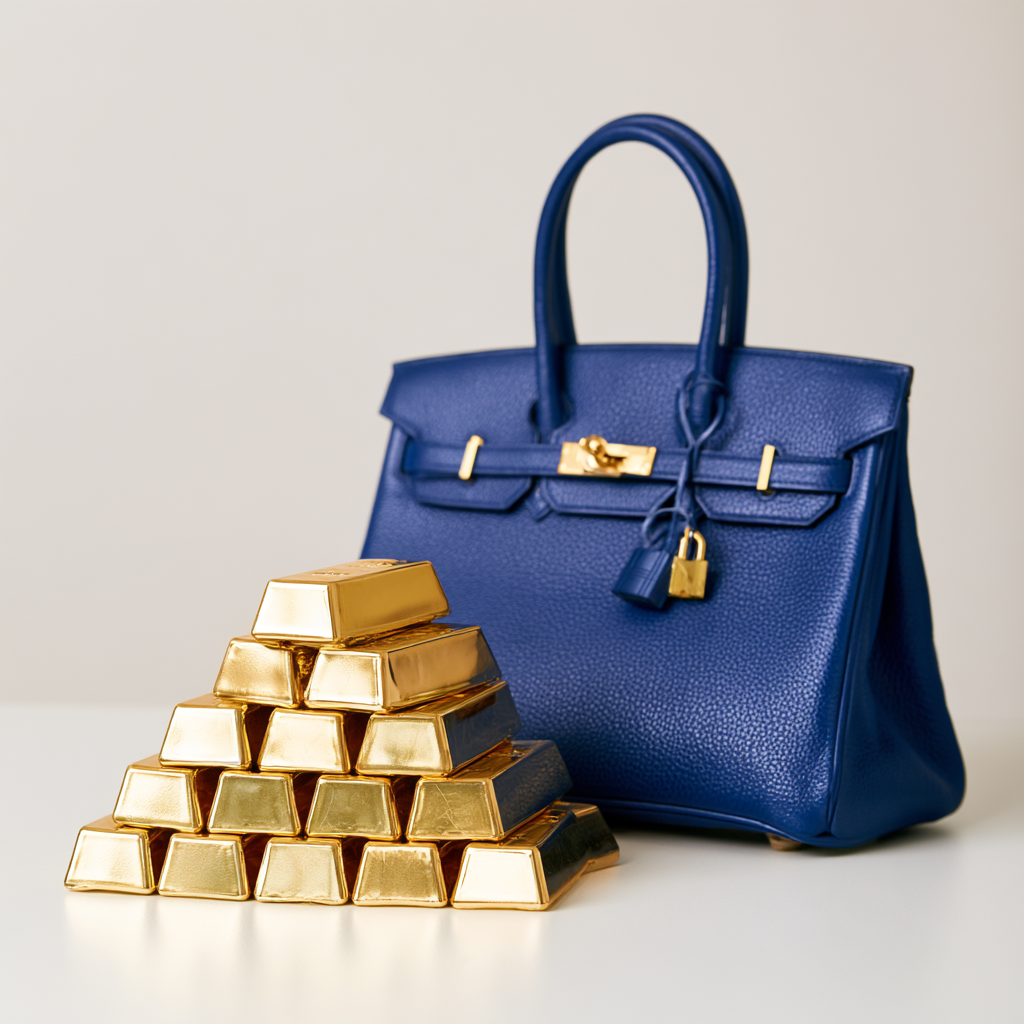
A Birkin loan is a short-term, asset-backed loan secured by an authenticated Hermès Birkin or Kelly handbag rather than income, credit history, or a bank guarantee. Specialized luxury-asset lenders hold the bag as collateral and advance cash against its current resale value, releasing the item back to the owner once the loan is repaid.
Hermès Birkins and Kellys have earned a place alongside watches, colored diamonds, and blue-chip art in trophy-asset lending portfolios for a reason that has nothing to do with fashion trends. Production is deliberately constrained, waitlists at Hermès boutiques routinely run years long, and resale platforms like Vestiaire Collective and The RealReal show certain configurations appreciating well past retail. That scarcity gives lenders confidence that a bag pledged today will still command strong demand in six or twelve months if a borrower defaults, which is the entire foundation of collateral lending.
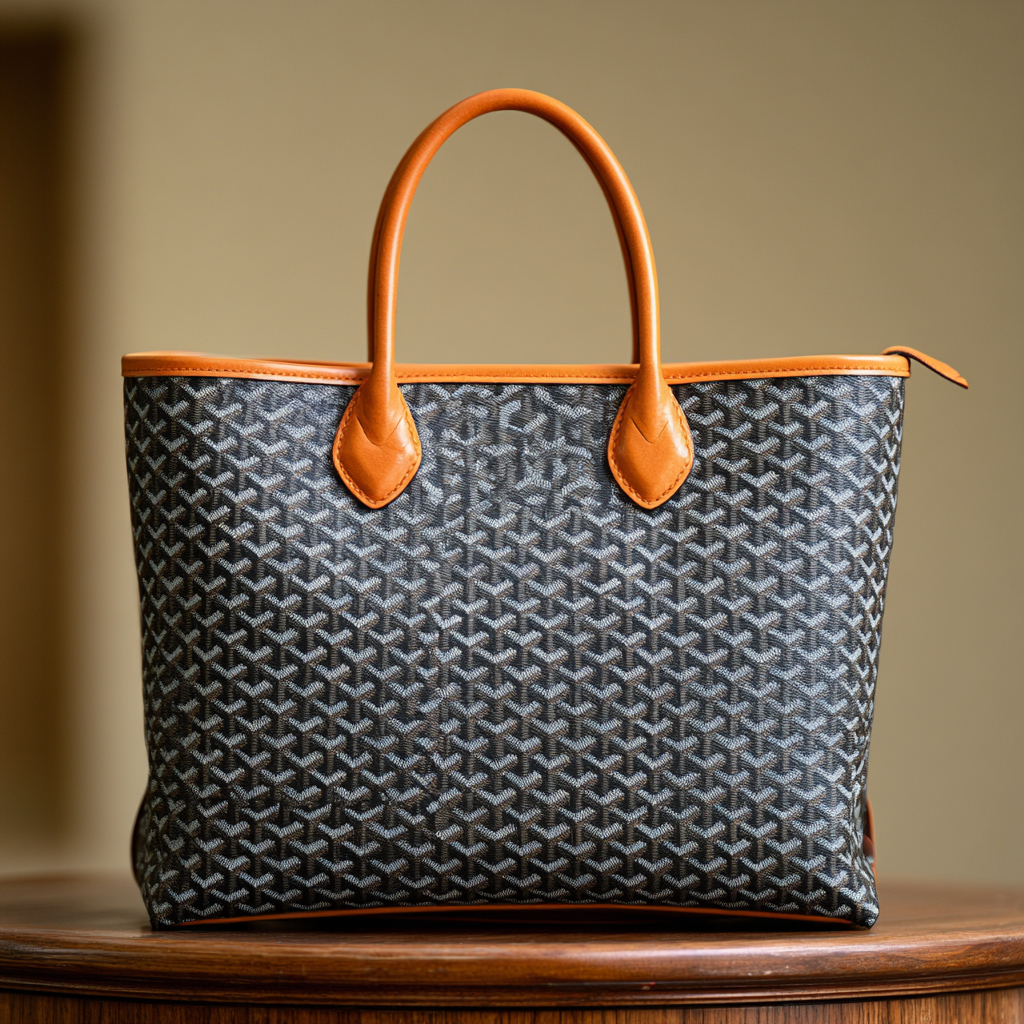
Not every handbag clears this bar. Lenders draw a sharp line between Hermès quota bags (Birkin, Kelly, and a handful of other references) and mass-produced designer handbags from other houses. Borro’s underwriting explicitly applies lower loan-to-value ratios to non-quota bags and non-Hermès brands, reflecting a thinner, more volatile resale market for those items compared to the Birkin and Kelly.
How Much Can You Borrow? LTV Ranges and What Drives Them
Specialized lenders typically advance 50 to 75 percent of a Birkin or Kelly’s authenticated secondary-market value, with the exact figure driven by model, leather, color, hardware, condition, and documentation. Rates and terms vary by lender, and the loan is calculated against current resale value, not original retail price.
Borro prices core Birkin and Kelly references in strong condition at 65 to 75 percent LTV, reserving the lower end of that band for bags missing accessories or showing wear. Beverly Loan Company, which structures much of its business around exotic-skin Hermès collections, quotes a slightly wider 50 to 70 percent range tied to current market pricing, color, and how complete the documentation is. New York Loan advances 40 to 70 percent of estimated secondary-market value, and Palm Beach Loan offers 60 to 75 percent of current authenticated resale value, with a $3,000 minimum secondary-market value required to qualify at all.
It’s worth putting Hermès in context against the broader handbag category. Beverly Loan’s general designer-handbag baseline (non-Hermès) sits at 30 to 60 percent of resale value, a full tier below what a comparable Birkin or Kelly commands. That spread is the clearest evidence that lenders treat Hermès quota bags as a distinct, higher-confidence collateral class rather than lumping them in with ordinary designer inventory.
| Lender | Typical LTV Range | Typical Term | Notes |
|---|---|---|---|
| Borro | 65% – 75% | 6 – 12 months, renewable | Core Birkin/Kelly references in strong condition; lower LTV for non-quota bags |
| Beverly Loan Company | 50% – 70% | Varies by agreement | Weighted toward exotic-skin condition, color, and documentation |
| New York Loan | 40% – 70% | ~4 months, renewable | No credit checks or income documentation; non-recourse |
| Palm Beach Loan | 60% – 75% | 30 days – 12 months | $3,000 minimum secondary-market value to qualify |
The Valuation Process: How Lenders Appraise a Birkin or Kelly
Lenders appraise a Birkin or Kelly using current secondary-market comparables, not the original Hermès retail receipt. Appraisers physically inspect hardware, stitching, the interior date stamp, and leather condition, then cross-reference recent sales on resale platforms and at auction to arrive at a replacement value figure that becomes the basis for the loan.
Palm Beach Loan’s appraisers triangulate value using Vestiaire Collection, The RealReal, and recent auction results, a method that mirrors how fine art and watch specialists price single-owner pieces against comparable sales rather than list price. Beverly Loan’s in-house team collects model, size, leather type, and hardware data alongside high-resolution photographs of the date stamp, corners, and handles, then verifies authenticity before checking whether the “full set” is present: original box, dust bag, rain cover, and receipt. A complete set doesn’t just prove provenance. It materially raises the number a lender is willing to advance, because a documented bag resells faster and closer to top-of-market pricing if the lender ever needs to liquidate.
What Affects Your LTV: Condition (corners, hardware, interior staining), completeness of documentation (box, dust bag, receipt, rain cover), color and leather rarity (exotic skins and limited palettes command stronger resale comparables), and model desirability (Birkin 25 and 30 in Togo or Epsom generally outperform less liquid sizes and leathers).
Step-by-Step: From Inquiry to Funding
The typical Birkin loan process runs from initial photo inquiry to funded loan in as little as one to two business days. Borrowers submit photos for an indicative range, ship or hand-deliver the bag for insured appraisal, receive a written loan offer, and get funded once terms are accepted, with the bag held in insured, climate-controlled storage for the loan’s duration.
Borro’s workflow illustrates the sequence most specialized lenders follow: a photo-based inquiry generates a preliminary range, an insured courier collects the bag for in-person appraisal, and the lender issues a written offer specifying loan amount, term, rate, and fees. Once the borrower accepts, funding typically arrives the same or next business day. The bag then sits in insured, climate-controlled storage until the loan is repaid, at which point it’s returned fully insured. New York Loan follows a similar in-person model with on-the-spot offers and same-day funding, while Palm Beach Loan builds in extension options and charges no prepayment penalties, giving borrowers flexibility if their liquidity need resolves faster than expected.
- Inquiry: Submit photos of the bag, receipt, and accessories for a preliminary value range.
- Appraisal: Insured courier or in-person inspection verifies authenticity, condition, and completeness.
- Offer: Written terms covering loan amount, rate, fees, and duration.
- Funding: Same- or next-business-day disbursement upon acceptance.
- Storage: Bag held in insured, climate-controlled facility for the loan term.
- Repayment or renewal: Bag returned insured upon full repayment, or the loan is renewed.
Loan Terms, Costs, and Non-Recourse Structure Explained
Most Birkin and Kelly loans run four to twelve months with renewal options, carry no credit check or income verification requirement, and are structured as non-recourse: if the loan isn’t repaid, the lender keeps the bag and pursues no further collection action against the borrower.
Borro structures terms around six to twelve months with renewal built in, pricing rates on a monthly basis plus appraisal, storage, and insurance fees layered into the offer. New York Loan runs shorter, roughly four-month terms with renewal options, and underwrites purely on the collateral, meaning no credit checks, no income documentation, and no minimum credit score requirement. Palm Beach Loan offers the widest flexibility, from 30 days up to 12 months, with extensions available and no prepayment penalty for borrowers who repay early.
The non-recourse structure is the feature that distinguishes this category from a personal loan or line of credit, and it deserves a plain-language explanation rather than a marketing gloss.
If You Can’t Repay: Non-recourse means your exposure is limited to the bag itself. If a loan goes unpaid at the end of its term and any renewal window, the lender retains the Birkin or Kelly and sells it to recover the principal. There is no collections activity, no lawsuit, and no impact on other assets. It does mean you permanently lose the bag, so this structure should be evaluated as a genuine liquidity trade-off, not a risk-free source of cash.
Real-World Benchmarks: What Specific Models Typically Secure
Loan amounts for a Birkin 25 in Togo or Epsom leather typically fall between $8,000 and $20,000 or more depending on color and hardware, while a Kelly 28 or 32 typically secures $7,000 to $16,000 depending on leather and vintage. A Chanel Classic Flap, by comparison, typically secures $4,000 to $8,000, illustrating the premium Hermès quota bags command in this lending category.
These figures, reported by Palm Beach Loan, give a useful sense of scale, but they’re starting points rather than guarantees. A Birkin 25 in a discontinued color, or one carrying gold or Rose Gold hardware in strong demand, can push toward the top of that range or beyond it if recent comparable sales support the number. A well-worn bag missing its box and dust bag, even in a desirable size, tends to land near the bottom.
| Model | Typical Loan Range | Key Variables |
|---|---|---|
| Hermès Birkin 25 (Togo/Epsom) | $8,000 – $20,000+ | Color, hardware, leather condition |
| Hermès Kelly 28 or 32 | $7,000 – $16,000 | Leather type, vintage vs. current production |
| Chanel Classic Flap (comparison) | $4,000 – $8,000 | Size, hardware, aged vs. current caviar leather |
Curious what your specific Birkin or Kelly could secure? A photo-based inquiry gets you an indicative range without shipping the bag or running a credit check.
Birkin Loans vs. Other Asset-Backed Lending (Global Context)
Birkin and Kelly loans sit within the same collateral-lending category as watch loans, jewelry loans, and fine-art loans, typically at LTV ratios of 50 to 75 percent domestically, though some international lenders advance more aggressively. A Forbes profile of Hong Kong lender Yes Lady Finance documented loans up to roughly 80 percent of a Birkin’s value, with a $20,600 loan issued against a single bag on a four-month term at 4 percent monthly interest, funded in about 30 minutes.
That Hong Kong benchmark, also confirmed by Business Insider’s 2013 profile of the same lender, shows how much LTV ceilings can vary by market and by how aggressively a lender is willing to price risk on a fast-turning asset. U.S.-based lenders tend to run more conservative, in the 50 to 75 percent band, reflecting slower funding timelines but generally lower monthly costs and longer terms. For a borrower comparing a Birkin loan against pledging a Patek Philippe Nautilus or a pair of D-flawless diamond studs, the underwriting logic is nearly identical: verified authenticity, current resale comparables, and a collateral value that holds up if the lender has to sell.
Is a Birkin Loan Right for You? Key Considerations Before You Apply
A Birkin loan makes sense for owners who need short-term liquidity without selling the bag outright or exposing the transaction to a credit check, tax filing, or bank underwriting process. It’s a less obvious fit for anyone unwilling to accept the risk of permanently losing the bag if the loan isn’t repaid within the term and any renewal window.
Family offices and private wealth managers tend to reach for this structure in specific situations: bridging a capital call before a distribution lands, covering a tax payment without disrupting a portfolio’s asset allocation, or generating liquidity discreetly ahead of a larger transaction where a bank inquiry or credit pull isn’t desirable. Because approval is based entirely on the collateral’s value rather than income or credit history, the process moves faster than traditional financing and leaves no trace on a credit report.
Before applying, gather everything that supports the appraisal: the original receipt, box, dust bag, rain cover if included, and clear photographs of the interior date stamp and hardware. A complete file typically moves a bag toward the higher end of its lender’s LTV range and shortens the appraisal-to-offer timeline.
Frequently Asked Questions
How much can I borrow against a Hermès Birkin?
Specialized lenders typically advance 50 to 75 percent of a Birkin’s authenticated secondary-market value. A Birkin 25 in Togo or Epsom leather commonly secures $8,000 to $20,000 or more depending on color, hardware, and condition, though exact amounts vary by lender and by the specific bag’s documentation and rarity.
Does a Birkin loan require a credit check?
No. Reputable luxury-asset lenders base approval entirely on the collateral’s authenticated value, not credit history or income documentation. Lenders such as Borro and New York Loan confirm no credit checks, no income verification, and no minimum credit score requirement for handbag-backed loans.
What happens if I can’t repay a Birkin loan?
Most Birkin loans are structured as non-recourse, meaning the lender’s only remedy is retaining and selling the pledged bag. Borrowers face no lawsuit or collections activity beyond losing the collateral. This means the bag is permanently forfeited if the loan and any renewal period go unpaid.
How long does the appraisal and funding process take?
Timelines vary by lender, but many specialized handbag lenders fund within one to two business days of accepting a written loan offer. The process generally involves a photo-based inquiry, an insured courier or in-person appraisal, a written offer, and same- or next-business-day funding once terms are accepted.
Does my bag need its original box and receipt to qualify?
Original packaging and documentation aren’t always mandatory, but a complete set (box, dust bag, receipt, rain cover) materially supports authentication and typically results in a higher loan-to-value offer. Bags missing these items generally receive a more conservative valuation.
How does a Birkin loan compare to a personal loan or line of credit?
Birkin loans are asset-backed and non-recourse, meaning approval depends on the bag’s value rather than credit score or income, and default results only in loss of the collateral. Personal loans and lines of credit typically require credit checks, income verification, and carry broader recourse against the borrower’s other assets in default.
Will a Kelly bag qualify for the same loan amounts as a Birkin?
Kelly bags qualify under similar underwriting criteria as Birkins. A Kelly 28 or 32 typically secures $7,000 to $16,000 depending on leather type and whether the bag is vintage or current production, generally trailing comparable Birkin sizes slightly due to differences in resale demand.
Sources
- Borro, “Hermès Birkin and Kelly Loans: Borrowing Against Trophy Handbags as Collateral,” published June 7, 2026, updated June 11, 2026. https://borro.com/hermes-birkin-kelly-loans-trophy-handbag-collateral-2026/
- Beverly Loan Company, “Hermès Birkin Portfolio Liquidity: Structuring Loans Against Exotic-Skin Collections,” published June 29, 2026. https://beverlyloan.com/hermes-birkin-portfolio-liquidity-structuring-loans-against-exotic-skin-collections/
- New York Loan, company loan program data on Hermès handbag lending terms and underwriting criteria.
- Palm Beach Loan, company loan program data on Hermès handbag lending terms, appraisal methodology, and model-specific loan benchmarks.
- Cecilia Rodriguez, “Designer Handbags: The New Prized Collateral For Loans,” Forbes, August 18, 2013.
- Business Insider, profile of Yes Lady Finance (Hong Kong) handbag lending program, 2013.
This article is for informational purposes only and does not constitute financial advice. Loan terms, eligibility, and asset valuations vary by lender and by the specific bag submitted for appraisal. Contact Borro directly for a personalized loan quote. Borro is not a bank.