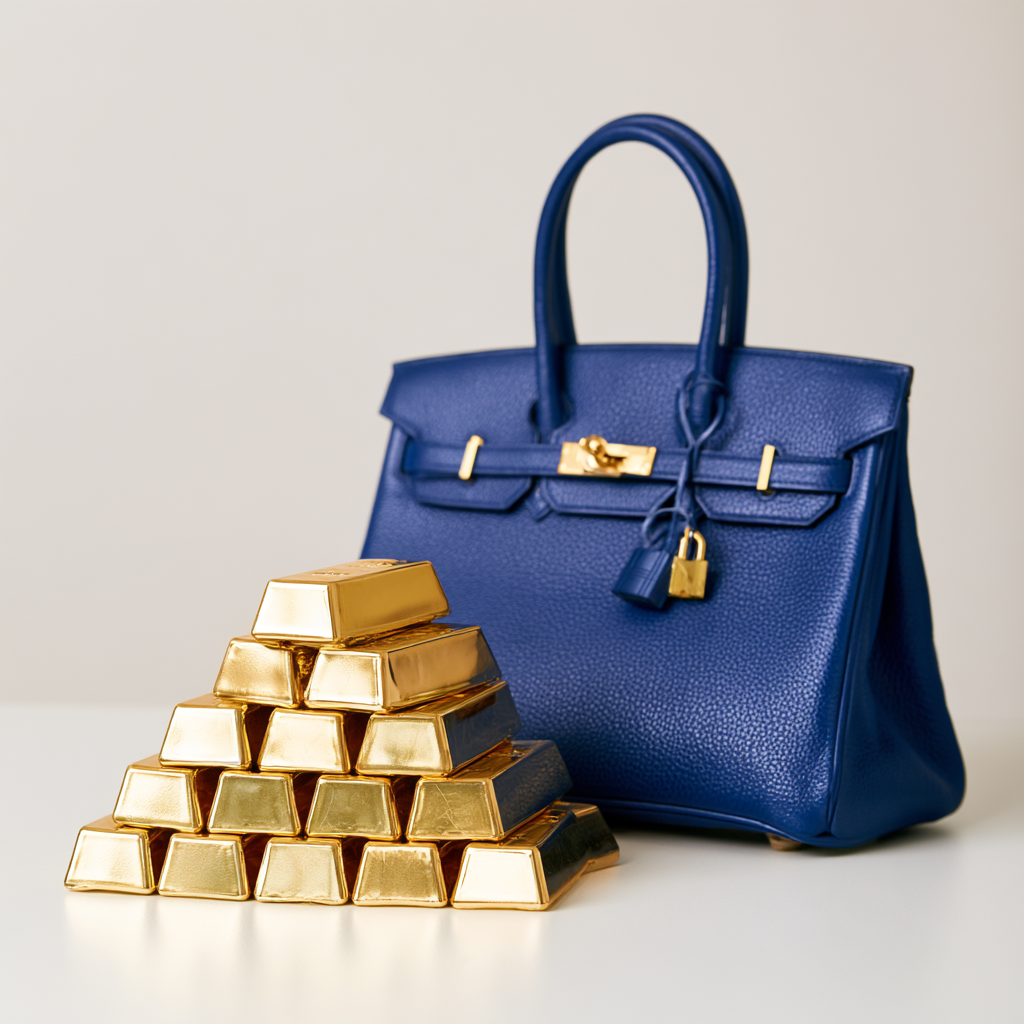
Gold has been collateral for nearly four thousand years — older than paper money, older than banks, older than most of the legal frameworks that govern modern lending. What has changed is the precision of the appraisal and the speed of funding. A gold loan in 2026 is a short-term, asset-backed credit facility secured by physical gold the borrower already owns: investment-grade bullion, certified coins, scrap, or fine jewelry. The lender takes possession of the gold for the term of the loan, advances a percentage of its appraised value, and returns the asset when the loan is repaid in full.
Unlike a personal loan or a HELOC, a gold loan is not underwritten against the borrower’s income or credit score. It is underwritten against the gold. That distinction is what makes it a useful liquidity tool for high-net-worth individuals, business owners with short-term capital needs, and families navigating an illiquid moment — and it is what places gold lending inside the broader category of asset-backed lending that Borro and a handful of other regulated firms operate in.
What Is a Gold Loan?
A gold loan is a closed-end secured loan. The borrower pledges physical gold as collateral; the lender holds the gold in an insured, audited vault for the duration of the term; and the borrower repays principal plus interest, after which the collateral is released. If the borrower defaults, the lender’s recovery is limited to the value of the gold — there is no recourse to other assets and no impact on the borrower’s credit file in most cases.
That structure produces three features that distinguish gold loans from most consumer credit products:
- Speed. Because the underwriting question is “what is the gold worth” rather than “what is the borrower’s debt-to-income ratio,” funding can close in days, not weeks.
- Privacy. The transaction generally does not appear on a credit report.
- Limited downside risk to the borrower’s broader balance sheet. The pledged gold is the maximum exposure.
What Counts as Gold Collateral?
Not all gold is equivalent for lending purposes. Lenders draw a meaningful line between gold whose value is set by global spot markets and gold whose value reflects design, provenance, or brand.
Investment-grade bullion
Bars and ingots of recognized refiners — PAMP Suisse, Valcambi, the Royal Mint, the U.S. Mint, the Perth Mint, Credit Suisse — trade at very small premiums to the gold spot price. Standard sizes (1 oz, 10 oz, 1 kg, the 400 oz London Good Delivery bar) are the most liquid and command the highest loan-to-value ratios because the lender can hedge or liquidate the position quickly if necessary.
Sovereign and numismatic coins
American Gold Eagles, Canadian Maple Leafs, South African Krugerrands, and Austrian Philharmonics are widely traded modern bullion coins. Older U.S. coinage (pre-1933 double eagles, certified rare-date pieces) carries numismatic premiums above melt value, but those premiums are appraised conservatively for lending purposes — the lender’s worst-case recovery is melt.
Fine jewelry
This is the largest category by piece count and the most nuanced by valuation. A plain 18-karat gold chain is valued primarily on gold weight and purity. A signed piece from Cartier, Van Cleef & Arpels, Bulgari, Boucheron, or Tiffany is valued on the signature, design, condition, and provenance — often several multiples of melt. Borro’s editorial team has covered the mechanics of this premium in how Cartier, Boucheron, JAR, and Belperron became the asset-class jewelry market.
Scrap and broken jewelry
Damaged, broken, or unfashionable gold pieces are valued strictly on weight and purity. A loan is possible, though the LTV will be lower than on intact bullion.
How Borro Values Gold Collateral
Every appraisal begins with three measurements: weight, purity, and current spot price. From there, the valuation moves in one of two directions depending on what is being pledged.
For bullion and bullion coins, the formula is close to mechanical:
Weight (troy ounces) × purity (fineness) × spot price = gross gold value
Lenders then apply a discount to account for spot-price volatility over the term of the loan, refiner premium spread, and storage and insurance costs. The result is the appraised value used to determine the maximum loan amount.
For fine jewelry, the appraiser layers brand, design, age, condition, gemstone content, and provenance documentation on top of the gold weight. A Cartier Trinity ring will be appraised at a meaningful premium to its melt value. A 22-karat heirloom bangle without a signature will be appraised closer to melt. The difference can be substantial, which is why a specialist lender almost always yields a higher loan amount than a high-street pawnbroker on the same piece. The dynamics of trophy versus non-signed jewelry are detailed in Borro’s May 2026 jewelry market verdict.
Typical Loan-to-Value, Terms, and Rates
The economics of a gold loan vary by lender, borrower, and the specific asset, but a few ranges are typical for the high-value segment Borro operates in:
- Loan-to-value: generally 50% to 75% of appraised value. Bullion at the high end of that range, signed jewelry typically in the middle, scrap and broken jewelry at the lower end.
- Term: commonly 6 to 12 months, with the option to renew, extend, or repay early. Short-term liquidity is the typical use case.
- Rates: priced in monthly basis points rather than annual APR, reflecting the short duration. The cost of capital is competitive with other forms of asset-backed lending and almost always lower than unsecured consumer credit at the same speed of funding.
- Fees: appraisal, storage, and insurance are itemized separately and disclosed upfront.
The specific numbers for any given loan depend on the asset, the loan size, and the term — Borro publishes indicative ranges during the application conversation rather than as advertised teaser rates.
The Process: From Appraisal to Funding
- Inquiry and indicative quote. The borrower describes the asset; Borro’s lending team provides an indicative valuation range based on photos, weight, and any documentation. No commitment is made on either side.
- Authentication and appraisal. The asset is shipped via insured courier or hand-delivered to a Borro vault. Gemologists, watchmakers, or jewelry specialists examine it in person. A formal appraisal is issued.
- Loan offer. Borro presents the loan amount, term, rate, and fees in writing. The borrower can accept, decline, or counter.
- Documentation and funding. Loan documents are signed electronically. Funds are wired the same day or the next business day to the borrower’s account.
- Storage and repayment. The asset remains in vault storage, insured, for the term of the loan. The borrower can repay in full at any time and the collateral is shipped back, again via insured courier.
Gold Loans vs. Selling: When Each Makes Sense
The honest framing is that a gold loan is not always the right answer. Selling the asset converts illiquid value to cash without an ongoing interest obligation and without storage and insurance fees. The case for borrowing rather than selling generally rests on three factors:
- The borrower expects to want the asset back. Heirloom jewelry, a curated bullion stack, or a signed piece that fits a collecting thesis is hard to replace at a comparable price after a sale.
- The borrower expects gold to appreciate. Selling at a moment of perceived peak and buying back later carries timing risk that borrowing avoids.
- The borrower wants to manage the tax consequence. A loan is not a taxable event; a sale of gold held outside a retirement account generally is.
When none of those three conditions applies, selling outright is often the cleaner path.
Tax Implications of a Gold Loan
A loan against gold is generally not a taxable event in the United States — the borrower is exchanging temporary possession of an asset for cash and an obligation to repay, not realizing a gain. The asset’s cost basis is preserved. By contrast, selling gold held outside a qualified retirement account typically triggers a capital gains event, with collectibles (including most physical gold) taxed at a maximum federal rate of 28% rather than the lower long-term capital gains rates that apply to equities and real estate. Borro has covered the broader liquidity-versus-taxation framework in luxury asset loans and tax planning in 2026. As with any tax matter, the specifics depend on the borrower’s individual situation, and professional tax advice is recommended before structuring around the difference.
Frequently Asked Questions
Is a gold loan a pawn loan?
Mechanically, yes — both are short-term, asset-backed loans where the lender holds the collateral until repayment. The difference is in scale and process. Borro operates as a regulated lender focused on high-value gold, jewelry, and other luxury assets, with formal appraisal, insured vault storage, and documented loan terms. A traditional pawnshop typically operates on smaller loan sizes with simpler appraisal.
How much can I borrow against my gold?
For investment-grade bullion, expect a loan offer in the range of 65% to 75% of the gold’s appraised value. For signed jewelry, the loan tracks a percentage of the full appraised value including brand premium, which can result in a substantially higher dollar amount than a melt-based valuation would. For scrap, expect closer to 50% of melt value.
What happens to my gold during the loan?
The gold is stored in an insured, audited vault for the duration of the term. Borro carries full-value insurance on every piece in custody. The borrower can request photo updates or in-person inspection during the term.
Does taking a gold loan affect my credit score?
In most cases, no. Because the loan is secured by the gold itself and not underwritten against the borrower’s credit profile, the transaction generally does not appear on a credit report.
Can I get a gold loan against jewelry I inherited?
Yes — inherited fine jewelry is among the most common assets Borro lends against. The appraisal will assess signature, design, condition, gemstone content, and provenance. Documentation establishing chain of ownership is helpful but not always required.
What other assets can I borrow against?
Borro lends against a wide range of luxury assets, including watches, fine art, classic cars, rare wine and whisky, and certain musical instruments. The mechanics are similar to a gold loan: appraisal, secured custody, fixed term, return on repayment. The full asset-class framework is covered across Borro’s editorial archive, including pieces on precious stones, rare whisky, and fine wine.
Talk to Borro About a Gold Loan
If you are considering borrowing against gold, bullion, or fine jewelry — whether for a short-term capital need, a tax-aware liquidity event, or to bridge a longer transaction — Borro’s lending team can provide an indicative quote within one business day. The conversation is confidential, the appraisal is conducted by specialists, and the funding is fast.