
The luxury landscape has been fundamentally reshaped heading into 2026. Hermès surpassed LVMH as the world’s most valuable luxury company by market capitalization in 2025, Chanel appointed only its fourth creative director in 114 years, and Prada Group completed a landmark acquisition of Versace — creating Italy’s first homegrown luxury conglomerate. For collectors and owners of luxury assets, these shifts directly affect which brands hold, appreciate, and carry the strongest collateral value.
This ranking draws on the Brand Finance Luxury & Premium 50, Interbrand Best Global Brands, and Kantar BrandZ valuations published in 2025, combined with financial results and secondary market data through early 2026.
1. Louis Vuitton
Louis Vuitton remains the world’s most valuable luxury fashion brand by every major ranking methodology, with brand valuations ranging from $32.9 billion (Brand Finance) to $48.4 billion (Interbrand). Parent company LVMH posted €80.8 billion in revenue for 2025 — a slight organic decline that reflects broader market headwinds rather than brand weakness. Vuitton’s position at the apex of luxury is reinforced by its unmatched global retail footprint, consistently strong resale values, and cultural relevance that transcends fashion cycles. As collateral, Louis Vuitton leather goods — particularly iconic pieces like the Speedy, Neverfull, and Keepall — maintain reliable secondary market liquidity.
2. Hermès
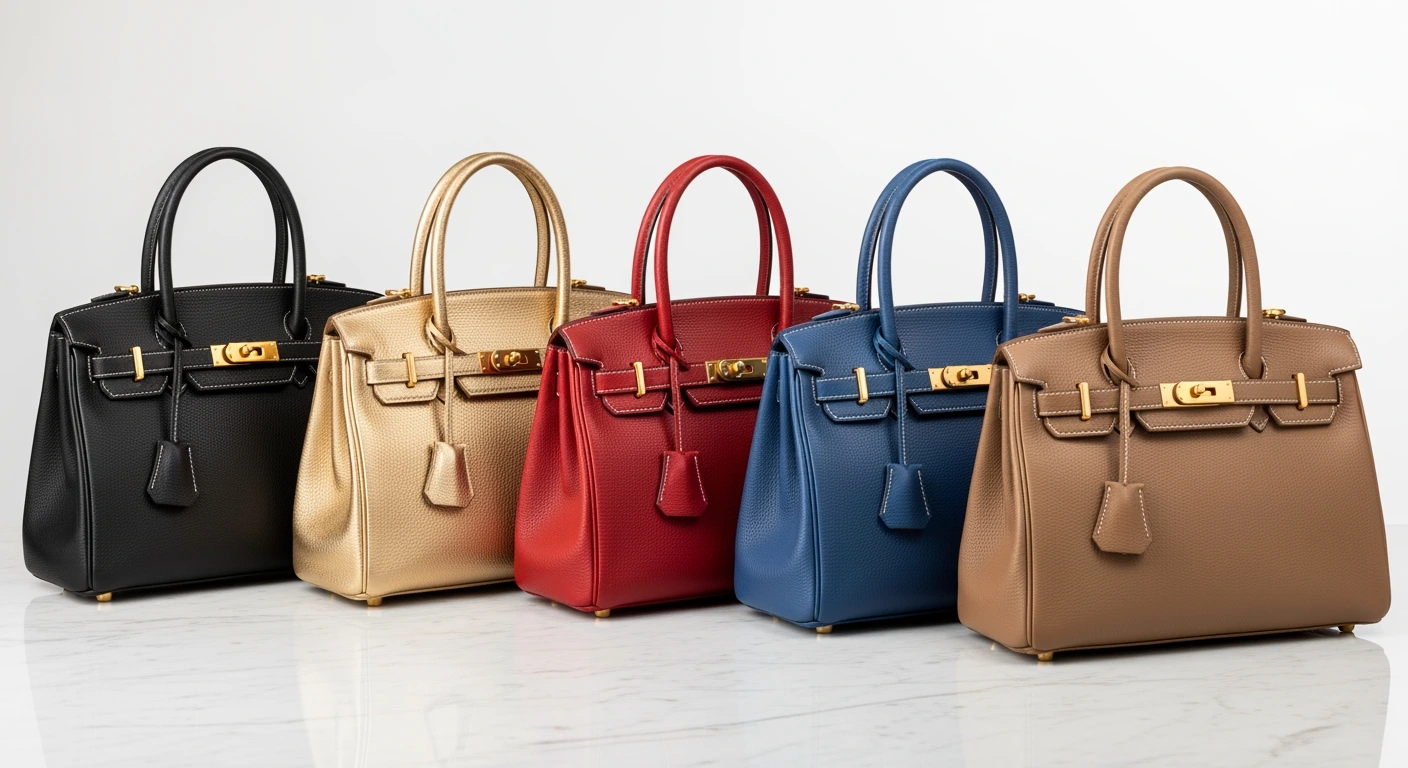
Hermès is the story of the luxury market in 2025–2026. The house posted €15.2 billion in revenue with an extraordinary 40.5% operating margin — the industry’s highest. Its market capitalization surpassed LVMH’s in April 2025, a milestone that would have been unthinkable a decade ago. Interbrand valued the brand at $40.9 billion, up 18% — making Hermès the only major luxury brand with positive growth in their ranking. Birkin sales on Sotheby’s grew substantially in 2025, with the average Birkin 30 resale reaching approximately $22,300. For luxury lending, Hermès leather goods represent some of the strongest collateral assets in the market.
3. Chanel
Chanel surged to the #2 position in Brand Finance’s ranking at $37.9 billion — a remarkable 45% year-over-year increase. The house made its most consequential creative appointment in decades, hiring Matthieu Blazy from Bottega Veneta as only its fourth creative director in 114 years. His debut collections in late 2025 blended relaxed proportions with classic Chanel codes to critical acclaim. On the asset side, Chanel’s aggressive price increases have pushed the Medium Classic Flap to $11,300 — up from $5,800 in 2019. That pricing power supports strong collateral value, though early 2026 reports suggest the secondary market is watching the new creative direction closely.
4. Rolex
Rolex occupies a category of one in luxury watches — no other brand matches its combination of production volume, resale demand, and cultural recognition. Brand Finance placed Rolex in the top five with 36% brand value growth. The Land-Dweller, launched at Watches & Wonders 2025, was the brand’s most significant new model in years, featuring 32 patent applications and a revolutionary high-beat movement with pricing from $13,900 to $118,050. On the secondary market, the Bloomberg Subdial Index showed Rolex gaining 3.3% across 2025, and demand for key references like the Submariner, Daytona, and GMT-Master II remains structurally strong. As collateral for luxury lending, Rolex is the gold standard — deep liquidity, global demand, and a proven appreciation track record.
5. Dior
Brand Finance named Dior the world’s strongest luxury brand with a Brand Strength Index score of 93.5 out of 100. The appointment of Jonathan Anderson — who left Loewe after growing that brand’s revenue fivefold — as creative director across all Dior lines (womenswear, menswear, and haute couture) was the most talked-about move in fashion. Anderson became only the first designer since Christian Dior himself to oversee every fashion category simultaneously. Named WWD’s Newsmaker of the Year for 2025, his debut womenswear show received a standing ovation. Dior’s position within LVMH’s portfolio gives it exceptional resources, and its leather goods carry strong and growing secondary market value.
6. Cartier
Cartier was the fastest-growing luxury brand in Kantar BrandZ’s 2025 ranking, up 18% year-over-year. Parent company Richemont posted €21.4 billion in revenue (+4%), with the jewelry maisons — Cartier, Van Cleef & Arpels, and Buccellati — delivering €15.3 billion and record quarterly sales of €6.2 billion in Q3, powered by double-digit growth in every region except China. Jewelry was the strongest-performing luxury category overall in 2025, growing while leather goods and fashion contracted. For collateral lending, Cartier watches and high jewelry represent reliable asset classes with consistent demand.
7. Gucci
Gucci is in the midst of the most dramatic transformation in its modern history. Revenue fell sharply through 2025 under the weight of a creative reset, and parent company Kering posted a net loss for the year — a stunning reversal. The house parted ways with Sabato De Sarno after just two years and made a bold bet by appointing Demna — formerly of Balenciaga — as creative director. Meanwhile, Kering brought in Luca de Meo as group CEO and launched an 18-month restructuring plan. Gucci’s collateral value has compressed alongside its brand momentum, but the scale of the turnaround effort and the brand’s deep heritage mean the market is watching closely for signs of recovery.
8. Prada / Miu Miu
Prada Group was the luxury sector’s standout performer, delivering €5.72 billion in revenue for 2025 — its 20th consecutive quarter of growth. The Miu Miu brand was the breakout star, with retail sales surging 35% for the full year and its share of group revenue rising from 25% to 32%. The €1.25 billion acquisition of Versace, completed in December 2025, positions Prada Group as Italy’s first true luxury conglomerate and a direct challenger to French-dominated groups. Prada and Miu Miu leather goods and accessories are seeing growing secondary market interest, reflecting the brand’s cultural momentum.
9. Saint Laurent
Saint Laurent posted €2.88 billion in revenue for 2025, a 9% decline that mirrors the broader challenges at parent company Kering. Creative director Anthony Vaccarello continues to steer the brand’s aesthetic, maintaining the house’s distinctive Parisian edge. While Saint Laurent’s trajectory has been more stable than Gucci’s, its fortunes are tied to Kering’s broader turnaround plan. The brand’s leather goods — particularly the Loulou, Kate, and Sac de Jour — maintain solid resale demand and carry meaningful collateral value.
10. Bottega Veneta
Bottega Veneta was the only growing fashion brand in Kering’s portfolio in 2025, up 4% even as its celebrated creative director Matthieu Blazy departed for Chanel. New designer Louise Trotter has been tasked with maintaining the brand’s quiet-luxury identity while adding her own signature. Bottega’s intrecciato leather goods have become some of the most sought-after items on the secondary market, and the brand’s logo-free philosophy resonates with the ongoing shift toward understated luxury. Its weave-pattern bags and accessories carry strong and growing collateral value.
What These Rankings Mean for Luxury Asset Value
The 2025–2026 luxury reshuffle has clear implications for anyone who owns, collects, or borrows against luxury assets. Three categories stand out as the strongest value stores heading into 2026:
Watches — Rolex and Patek Philippe lead the secondary market recovery, with Patek posting the strongest gains (roughly 7.7% on the Bloomberg Subdial Index in 2025). Cartier watches benefit from the broader jewelry-category tailwind. These are the most liquid collateral assets in luxury lending.
Hermès leather goods — Birkin and Kelly bags continue to trade at or above retail on the secondary market. Hermès’s extreme scarcity model and brand strength make these among the most reliable luxury collateral assets, though early 2026 signals warrant monitoring.
Jewelry — Cartier and Van Cleef & Arpels led the category with sustained double-digit growth. High jewelry from these houses carries strong appraisal value and growing collector demand.
Creative director changes create both opportunity and uncertainty in the secondary market. Departures drive search spikes and short-term price volatility — Loewe saw a 488% search surge after Anderson’s exit — but long-term collateral value depends on whether new creative visions sustain demand. The market rewards brands with deep heritage and structural scarcity over those dependent on seasonal trends.
Frequently Asked Questions
Which luxury brands hold value best in 2026?
Hermès, Rolex, Patek Philippe, and Cartier have demonstrated the strongest secondary market value retention heading into 2026. These brands combine limited supply, deep collector demand, and proven long-term appreciation.
How do creative director changes affect luxury asset values?
Creative director transitions can cause short-term secondary market volatility. Items from departing designers often spike in value initially, while the new direction takes time to establish market confidence. Heritage brands with strong identities tend to weather transitions better than trend-dependent ones.
What is the luxury resale market worth in 2026?
The global luxury resale market reached approximately €50 billion in 2025, according to Bain & Company. One in three luxury buyers now participates in resale, and participation is even higher among consumers under 35.
Which luxury conglomerate is performing best?
Hermès (independent) and Richemont (Cartier parent) were the strongest performers in 2025. Prada Group stood out for consecutive quarterly growth and its strategic Versace acquisition. LVMH remains the largest by revenue but faced headwinds, while Kering posted a net loss driven by Gucci’s decline.
Can I borrow against luxury items from these brands?
Yes. Borro offers collateral loans against watches, jewelry, handbags, and other luxury assets from all the brands listed here. Your item’s loan value is determined by its current secondary market demand, condition, and completeness. No credit checks required.