
Tangible Assets in a Digital Economy
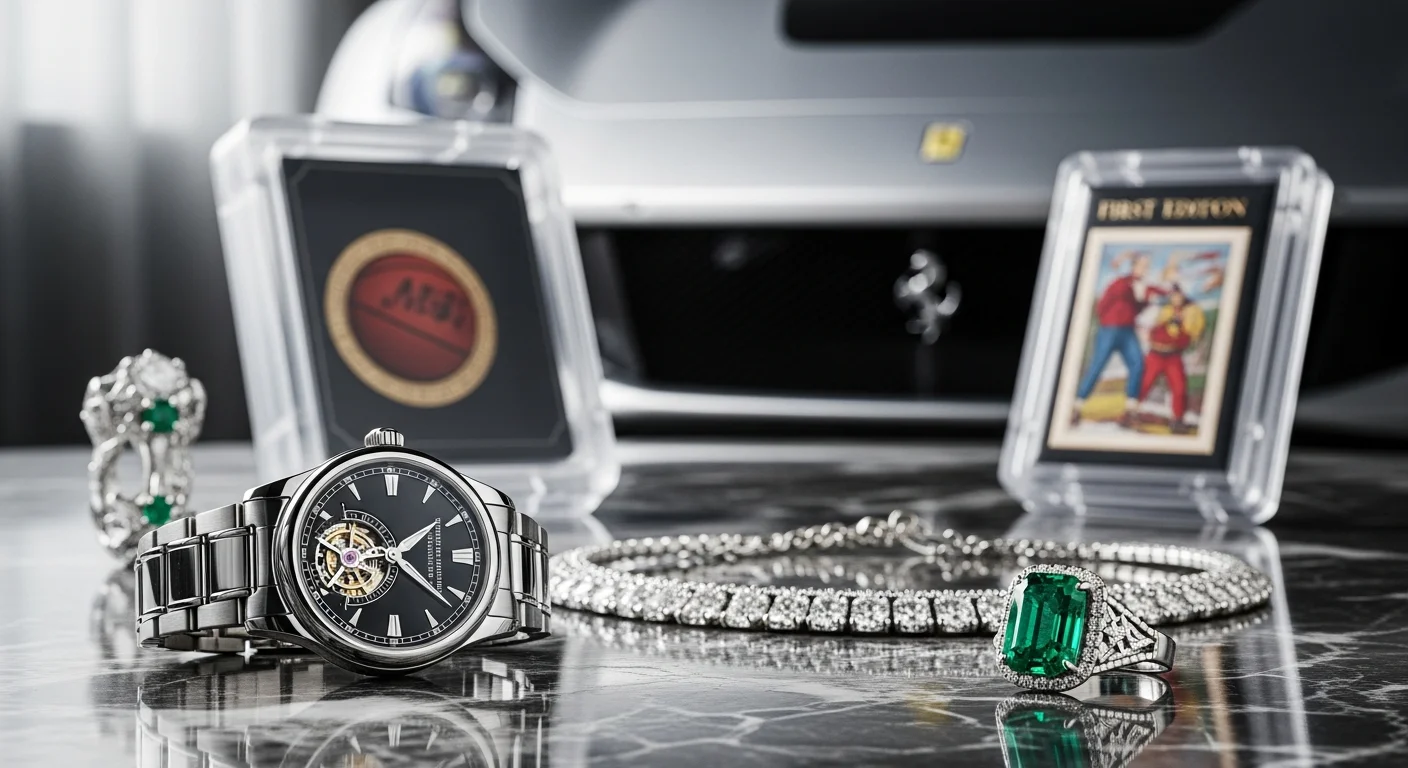
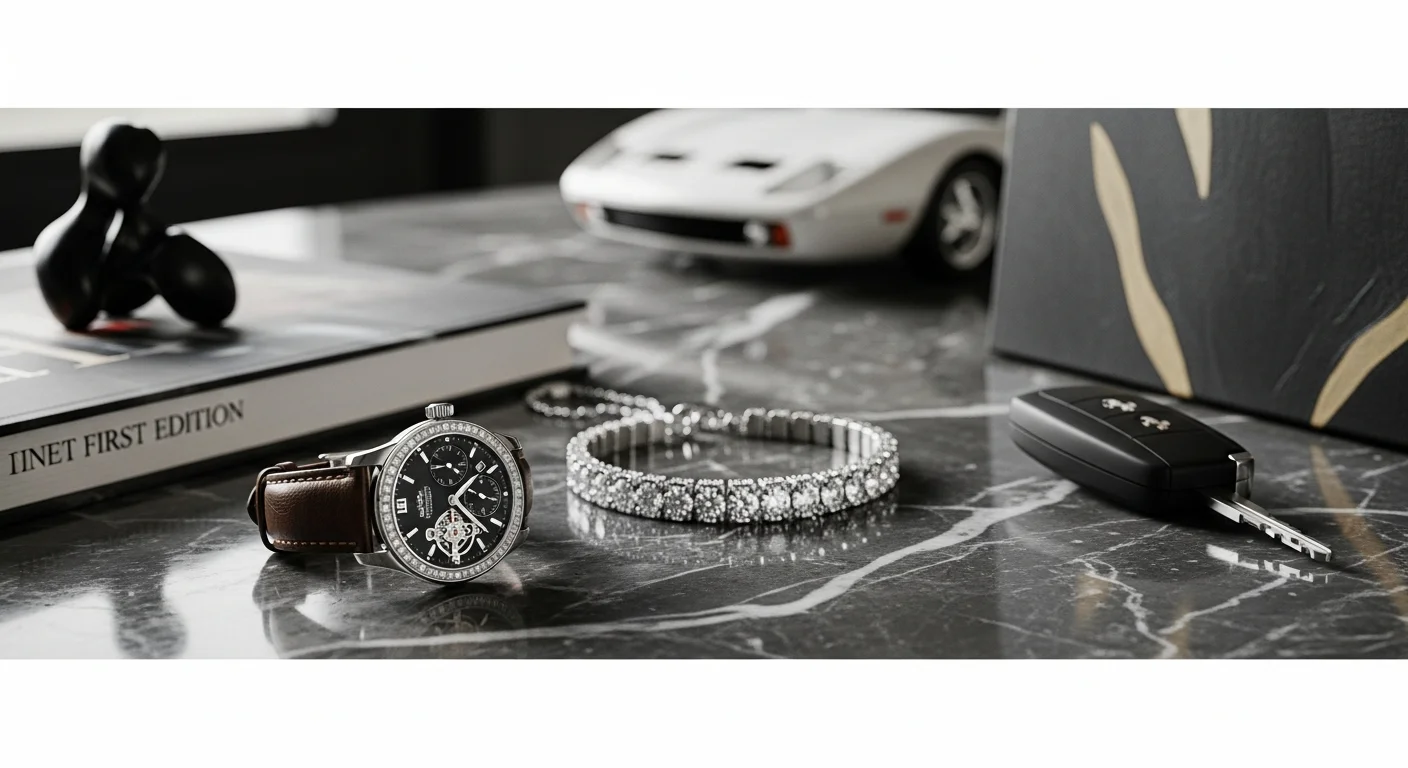
In an era defined by algorithmic trading, cryptocurrency volatility, and the rapid digitization of wealth, a counter-intuitive trend has emerged within the portfolios of the world’s most sophisticated investors. While the S&P 500 and Nasdaq continue to serve as the benchmarks for equity performance, “hard assets”—specifically investment-grade watches, handbags, and classic cars—have transitioned from mere status symbols to legitimate alternative asset classes. At Borro, we have monitored this shift through the Borro Luxury Index, a proprietary framework designed to track luxury asset investment performance against traditional market indicators.
The allure of tangible assets lies in their intrinsic value and scarcity. Unlike a digital stock certificate, a 1960s Rolex Cosmograph Daytona or a pristine Hermès Birkin exists in a physical space with a finite supply. This physical reality creates a price floor that is often absent in the speculative tech sector. As Chief Investment Officer, I have observed that during periods of high inflation and market correction, the correlation between luxury goods and the broader stock market remains remarkably low. This “decoupling” is the primary driver for high-net-worth individuals seeking to hedge against systemic economic risks while enjoying the aesthetic and social utility of their holdings.
The Knight Frank Luxury Investment Index 2023 further validates this sentiment, noting that while traditional markets experienced significant turbulence, the “investables” sector—led by art and watches—showed a resilience that surprised many institutional analysts. This article explores the data behind these returns, providing a comparative analysis of ROI across various asset classes.
The Numbers: Watches vs. Stocks
When analyzing luxury asset investment performance, the horological market remains the most transparent and liquid sub-sector. Over the past decade, blue-chip watches—specifically those from “The Big Three”: Patek Philippe, Audemars Piguet, and Rolex—have consistently challenged the returns of the S&P 500. According to our Borro Benchmark data, certain “Professional” or “Sports” models from Rolex have seen a five-year ROI exceeding 80%, outstripping many blue-chip equities.
The primary driver for this performance is the supply-demand imbalance. Rolex produces approximately one million watches per year, yet the global demand for models like the GMT-Master II or the Submariner is estimated to be ten times that figure. This scarcity is compounded by the “discontinuation factor.” When a brand ceases production of a specific reference, that model’s value often spikes on the secondary market. For example, the collectability of the Audemars Piguet Royal Oak Offshore has demonstrated that specialized variations can command premiums that traditional financial instruments simply cannot match.
However, it is vital to distinguish between “consumer luxury” and “investment-grade luxury.” A standard timepiece may depreciate the moment it leaves the boutique. In contrast, luxury watches like fine art provide excellent investment performance precisely because they are treated as historical artifacts. The following table illustrates how these assets compare to traditional benchmarks over a five-year horizon:
| Asset Class | 5-Year Approx. ROI | Volatility | Correlation to Stocks |
|---|---|---|---|
| S&P 500 | ~60-80% | Medium | 1.0 |
| Hermès Birkin | ~70-90% | Low | Low |
| Rolex (Sports) | ~80-100% | Medium | Low |
| Gold | ~40-50% | Low/Medium | Negative/Low |
Handbags: The Quiet Outperformer
While watches often dominate the headlines, the Hermès Birkin has quietly become one of the most stable and high-yielding assets in the alternative investment world. Data indicates that Birkin bags have seen a staggering 500% value increase over the past 35 years. To put that in perspective, the annual returns of a Birkin have frequently outperformed both gold and the S&P 500 on a risk-adjusted basis.
The “Birkin Alpha” is driven by a unique retail ecosystem. Hermès maintains strict control over its inventory, often requiring customers to build significant “spend history” before being offered the opportunity to purchase a Birkin or Kelly at retail price. This creates an immediate arbitrage opportunity on the secondary market, where a bag purchased for $12,000 at a boutique can instantly be resold for $24,000 or more, depending on the leather (e.g., Epsom vs. Togo) and the hardware color.
In the context of the Borro Luxury Index, handbags represent a “low volatility” play. Unlike stocks, which can drop 20% in a single trading session due to a bad earnings report, the value of a pristine Hermès bag is insulated by its status as a global currency. Whether in London, Hong Kong, or New York, the demand for “Holy Grail” handbags remains constant, providing a level of liquidity and price stability that is rare in the tangible asset space.
Condition and Provenance: The ROI Multipliers
Investors must understand that ROI is not guaranteed simply by purchasing a luxury brand. The two most critical drivers of value are condition and provenance. In the world of handbags, “Store Fresh” (never worn, plastic on the hardware) vs. “Excellent” condition can mean a 30% difference in valuation. For watches, the presence of the original “box and papers” and an unpolished case are mandatory for top-tier ROI. Our Investment Strategy expertise at Borro emphasizes that the delta between a mediocre asset and an investment-grade asset is often found in the documentation and preservation of the item.
Classic Cars: High Maintenance, High Reward
Classic cars, particularly marques like Ferrari, Porsche, and Aston Martin, offer perhaps the highest potential for massive capital appreciation, but they come with a different risk profile than watches or handbags. The Knight Frank Luxury Investment Index often ranks classic cars near the top for 10-year returns, sometimes exceeding 180%.
However, cars are “active” assets. Unlike a watch that can sit in a safe, a Ferrari 250 GTO requires climate-controlled storage, regular mechanical exercise, and specialized insurance. These carrying costs can eat into the net ROI. Nevertheless, for the strategic investor, classic cars offer a unique hedge. Their value is often tied to historical significance and racing pedigree—factors that are entirely independent of interest rate hikes or geopolitical tension.
At Borro, we treat classic cars as the “Private Equity” of the luxury world. They require more due diligence and have higher entry costs, but the payoff for a well-sourced, low-mileage example of a limited-production model can be life-changing. The key is identifying “emerging classics”—cars that are currently undervalued but are beginning to be recognized by the next generation of collectors.
Diversification Strategy
The goal of incorporating luxury assets into a portfolio is not to replace traditional equities, but to achieve a more efficient frontier. By spreading capital across the S&P 500, gold, and a curated selection of “hard” luxury assets, investors can reduce their overall portfolio variance.
Why Luxury Assets Belong in a Modern Portfolio:
- Low Correlation: Luxury assets do not typically move in lockstep with the stock market, providing a buffer during bear markets.
- Inflation Hedge: As the cost of raw materials and labor increases, the replacement value of luxury goods rises, often exceeding the rate of inflation.
- Currency Neutrality: High-end assets are tradable globally. If the USD weakens, the value of a Patek Philippe in GBP or EUR effectively rises.
- Dual Utility: These assets provide “aesthetic dividends”—the enjoyment of ownership—which has no equivalent in the stock or bond market.
The challenge for many investors has traditionally been liquidity. Luxury assets are “lumpy”—it takes time to sell a vintage watch or a rare handbag at the right price. This is where Borro provides a strategic advantage. By offering liquidity solutions against these high-value assets, we allow investors to maintain their exposure to the asset’s appreciation while accessing the capital they need for other opportunities.
Conclusion
The luxury asset investment performance we have tracked over the last decade suggests that the “alternative” label may soon be outdated. For many, these are now “essential” assets for wealth preservation. Whether it is the 500% historical rise of the Birkin or the resilient secondary market for Rolex, the data is clear: tangibility has a premium. As we look toward the future, the Borro Luxury Index will continue to monitor these trends, helping investors navigate the intersection of passion and profit.
Frequently Asked Questions
Q: Are luxury watches a safe investment?
A: While past performance doesn’t guarantee future results, blue-chip brands like Rolex have historically held value well against inflation. The key is focusing on “Professional” models and ensuring the piece has full provenance and is in original condition.
Q: Which handbag appreciates the most?
A: The Hermès Birkin and Kelly bags historically show the most consistent appreciation. Limited edition colors and exotic leathers (like Niloticus Crocodile) often see the highest jumps in value on the secondary market.
Leverage your portfolio’s value. Discover how your luxury assets can provide the liquidity you need without requiring a sale. Apply now to Borro.