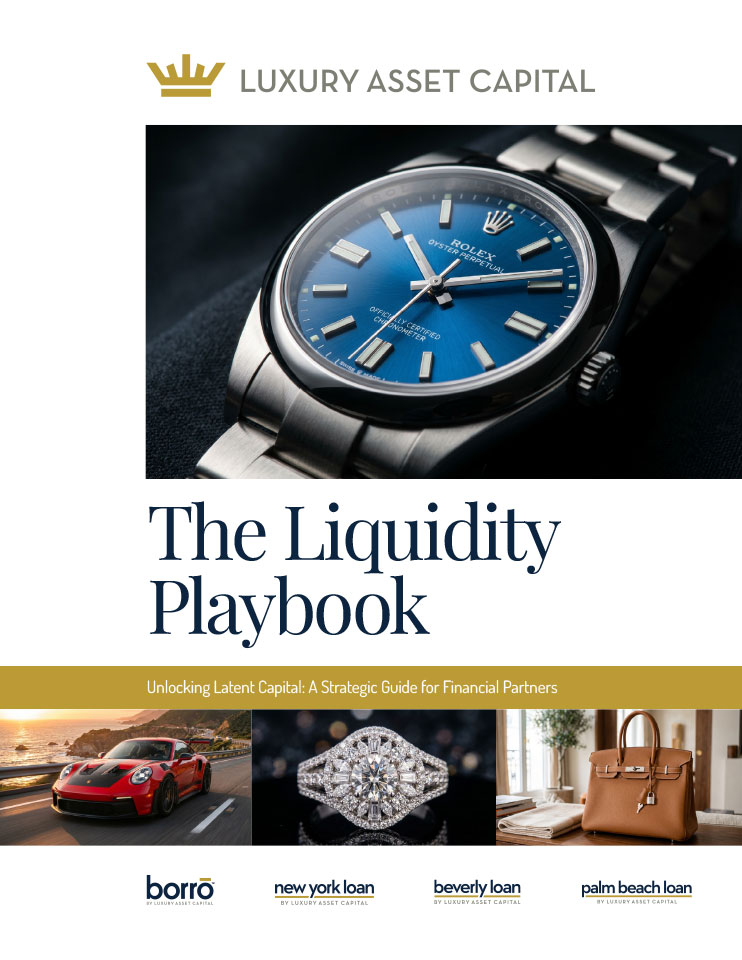

As spring auction season accelerates across the major auction houses and private dealer networks, the collector car and exotic asset market is delivering some of the most compelling valuation data in years. From Scottsdale carry-overs to the upcoming Pebble Beach pre-season previews, 2026 is shaping up as a pivotal year for owners of hypercars, vintage exotics, and ultra-rare production vehicles who are thinking carefully about how to leverage their iron.
Hypercar Values Hold Firm in a Shifting Macro Climate
Despite broader equity market volatility and interest rate uncertainty, blue-chip hypercars continue to demonstrate extraordinary value retention. The Ferrari LaFerrari Aperta — with fewer than 210 units produced worldwide — has seen private auction hammer prices hold above .2 million in Q1 2026, a level that has remained remarkably stable since mid-2024. Similarly, the Bugatti Chiron Super Sport 300+ remains anchored above .8 million in dealer-to-dealer transactions, with the limited 30-unit production run sustaining collector demand that outpaces depreciation curves seen in standard production luxury vehicles.
The Porsche 918 Spyder continues its long-term appreciation story. Originally launched at 45,000, clean-title examples with documented service histories are now regularly trading in the .8–.2 million range, representing an annualized appreciation rate that few traditional investment vehicles can match. This has not gone unnoticed by family offices and alternative asset advisors who are increasingly treating select hypercars as legitimate portfolio diversifiers.
Vintage Exotic Markets: Where the Real Intelligence Is
The vintage segment is producing perhaps the most nuanced story of 2026. The Ferrari 250 GT lineage — long considered the blue chip of collector cars — saw a 1963 250 GT Lusso sell at private treaty for just under .1 million in February, a transaction that was notable less for its price than for the speed at which it cleared. Qualified buyers are moving faster than they have in years, suggesting a scarcity of truly clean examples is beginning to concentrate bidding competition at the top of the market.
Meanwhile, the air-cooled Porsche 911 market — which saw some speculative excess between 2021 and 2023 — has returned to rational territory. Clean 1973 RS 2.7 examples are trading at 00,000–50,000, and specialists note that the normalization has actually attracted a new buyer profile: disciplined collectors who had been waiting for the froth to clear. Matching-numbers 911S models from 1969–1973 are finding consistent homes in the 75,000–25,000 corridor depending on provenance and color desirability.
The Exotic Truck & SUV Category Emerges as a Serious Asset Class
One of the more surprising developments in the collector car space is the rapid maturation of the exotic SUV and performance truck category as a recognized asset class. First-generation Ford Bronco restorations by prominent shops like Icon 4×4 and Gateway Bronco are regularly trading above 75,000–50,000 in clean condition. The Mercedes-Benz G63 AMG 6×6 — a low-production military-derived variant — continues to transact at 50,000 or above when examples surface, a price point that would have seemed implausible a decade ago.
Lamborghini Urus Performante units, while less exotic by traditional standards, are beginning to develop secondary market premiums in specialty configurations. Carbon fiber-heavy builds with the full Lamborghini Ad Personam program regularly command 0,000–0,000 above MSRP on the pre-owned market, a pattern that mirrors how the Porsche GT car premiums developed in the early 2010s.
Collector Car Lending: A Maturing Instrument for Liquidity-Aware Owners
As values across the collector segment have climbed, the sophistication of asset-backed lending against these vehicles has grown in parallel. Traditional lenders have historically been reluctant to underwrite collector car loans with the same efficiency they apply to more liquid assets like securities or real estate. But specialized lenders — including Borro — have developed appraisal frameworks and custody protocols that allow high-net-worth owners to access liquidity against verified collateral without disrupting their ownership experience in the interim.
For owners of hypercars, vintage Ferraris, or clean early Porsche 911 variants, asset-backed lending has become a genuine alternative to selling in a market where the cost of re-entry may exceed the cost of a short-term loan. With collector car values elevated and transaction costs — auction commissions, transport, re-certification — running 10–15% of vehicle value round-trip, holding through a liquidity event via a structured loan is increasingly the more economical path.
What This Means for Asset Owners
If you own one or more blue-chip collector vehicles, the spring 2026 market is sending a clear signal: the window for favorable valuations is open, but market intelligence matters more than ever. Whether your goal is to monetize appreciation, access liquidity for other opportunities, or simply understand what your collection is worth in today’s market, the time to establish a relationship with a specialized lender is before you need one.
Borro provides asset-backed loans secured by collector cars and exotic vehicles, with a process designed for sophisticated owners who value discretion, speed, and accurate valuations. Our team works directly with professional appraisers familiar with the nuances of the hypercar and vintage exotic markets, ensuring that loan-to-value ratios reflect true current market conditions rather than outdated book values.
To explore what your collector vehicle could unlock in terms of liquidity, speak directly with Borro’s asset specialists — no obligation, no public listing, and no disruption to your garage.