
Carat weight is the single most discussed — and most misunderstood — factor in diamond value. Everyone knows that bigger diamonds cost more, but surprisingly few people can accurately picture what a specific carat weight actually looks like on a hand, how different shapes affect apparent size, or why a well-cut 0.9 carat diamond can appear larger than a poorly cut 1.1 carat stone.
This guide shows you what each major carat weight looks like in practice, explains the relationship between carat weight and visual size, and gives you the pricing context that drives value at every size threshold.
How Diamond Size Changes with Carat Weight
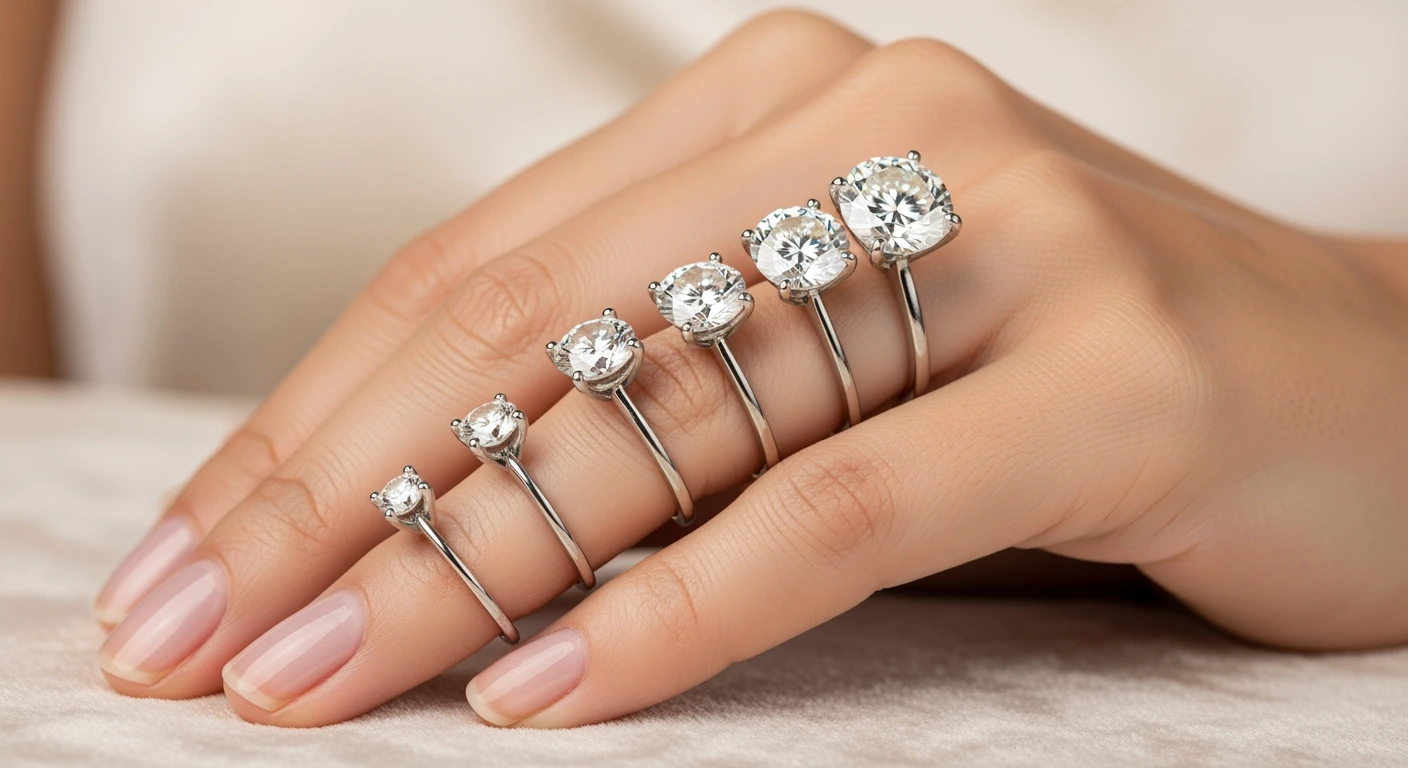
The most important thing to understand about carat weight is that visual size does not scale linearly with weight. A 2 carat diamond does not look twice as large as a 1 carat diamond. Because carat measures three-dimensional mass while your eye perceives two-dimensional face-up area, the relationship is roughly cubic. A 2 carat round brilliant is approximately 25% wider than a 1 carat stone — noticeable, but not double.
Here are the approximate face-up diameters for round brilliant cut diamonds at popular carat weights:
| Carat Weight | Diameter (mm) | Visual Reference | Approximate Price Range |
|---|---|---|---|
| 0.25 ct | ~4.1 mm | Slightly larger than a sesame seed | $300 – $1,500 |
| 0.50 ct | ~5.1 mm | Standard pencil lead width | $800 – $4,000 |
| 0.75 ct | ~5.8 mm | Between pencil lead and pencil eraser | $1,500 – $6,000 |
| 1.00 ct | ~6.5 mm | Standard pencil eraser | $2,000 – $25,000+ |
| 1.50 ct | ~7.4 mm | Standard shirt button | $5,000 – $30,000+ |
| 2.00 ct | ~8.1 mm | Standard shirt button (large) | $8,000 – $60,000+ |
| 3.00 ct | ~9.3 mm | Approaching 1 centimeter | $20,000 – $150,000+ |
| 4.00 ct | ~10.2 mm | Just over 1 centimeter | $40,000 – $300,000+ |
| 5.00 ct | ~11.0 mm | Slightly larger than 1 centimeter | $75,000 – $500,000+ |
Price ranges reflect typical retail for round brilliant, G-H color, VS1-VS2 clarity, GIA-certified. Prices vary significantly by cut quality, fluorescence, and market conditions.
Loose Diamonds: What Different Carat Sizes Look Like Face-Up
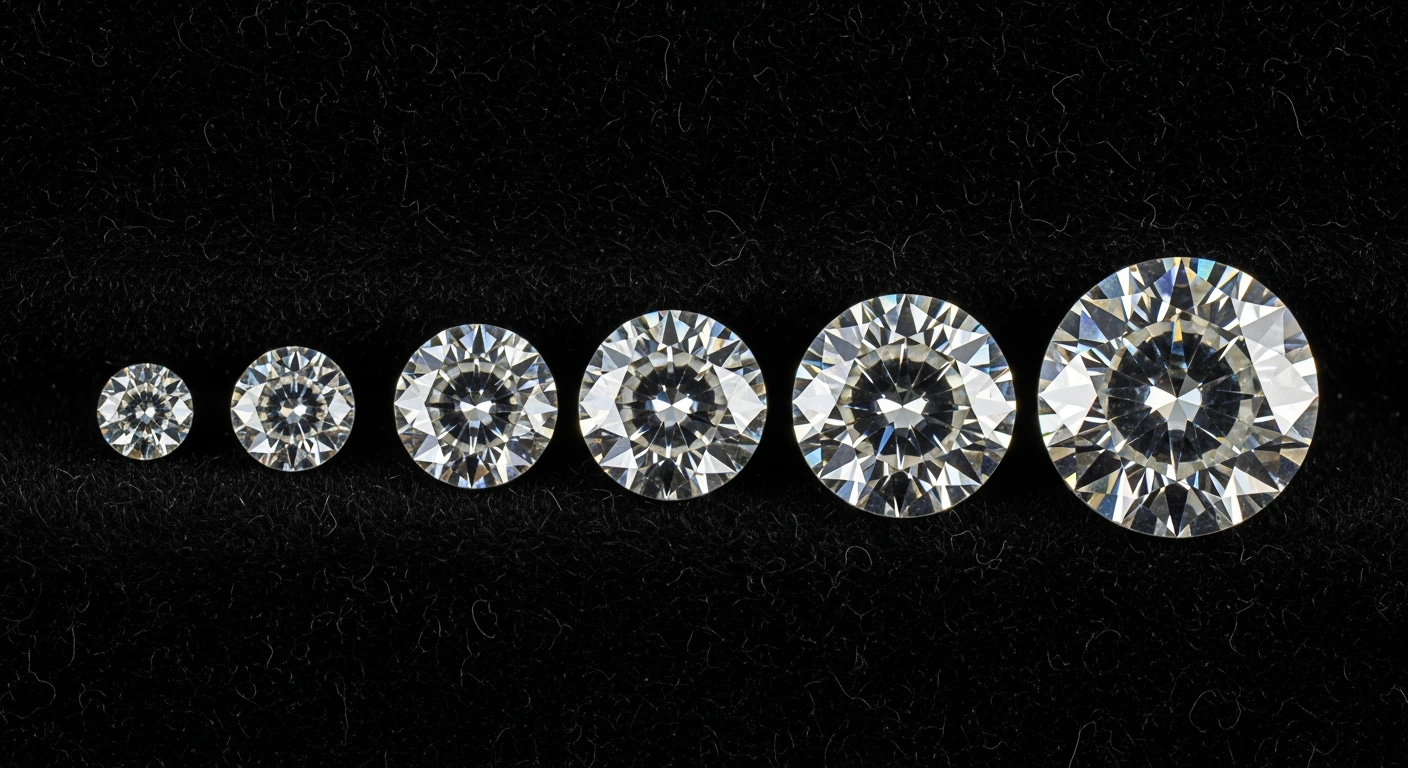
Viewing loose diamonds from directly above (the face-up position) is how you experience a diamond when it is set in a ring. This perspective shows you the spread — how much of the diamond’s weight translates into visible surface area. A well-proportioned diamond maximizes face-up spread, while a deep-cut diamond hides weight in the pavilion (bottom) where you cannot see it.
This is why cut quality matters so much for perceived size. A GIA Excellent cut 0.90 carat diamond can face up with the same diameter as a GIA Good cut 1.00 carat stone — because the better-cut stone distributes its mass more efficiently across the face-up area.
How Diamond Shape Affects Apparent Size
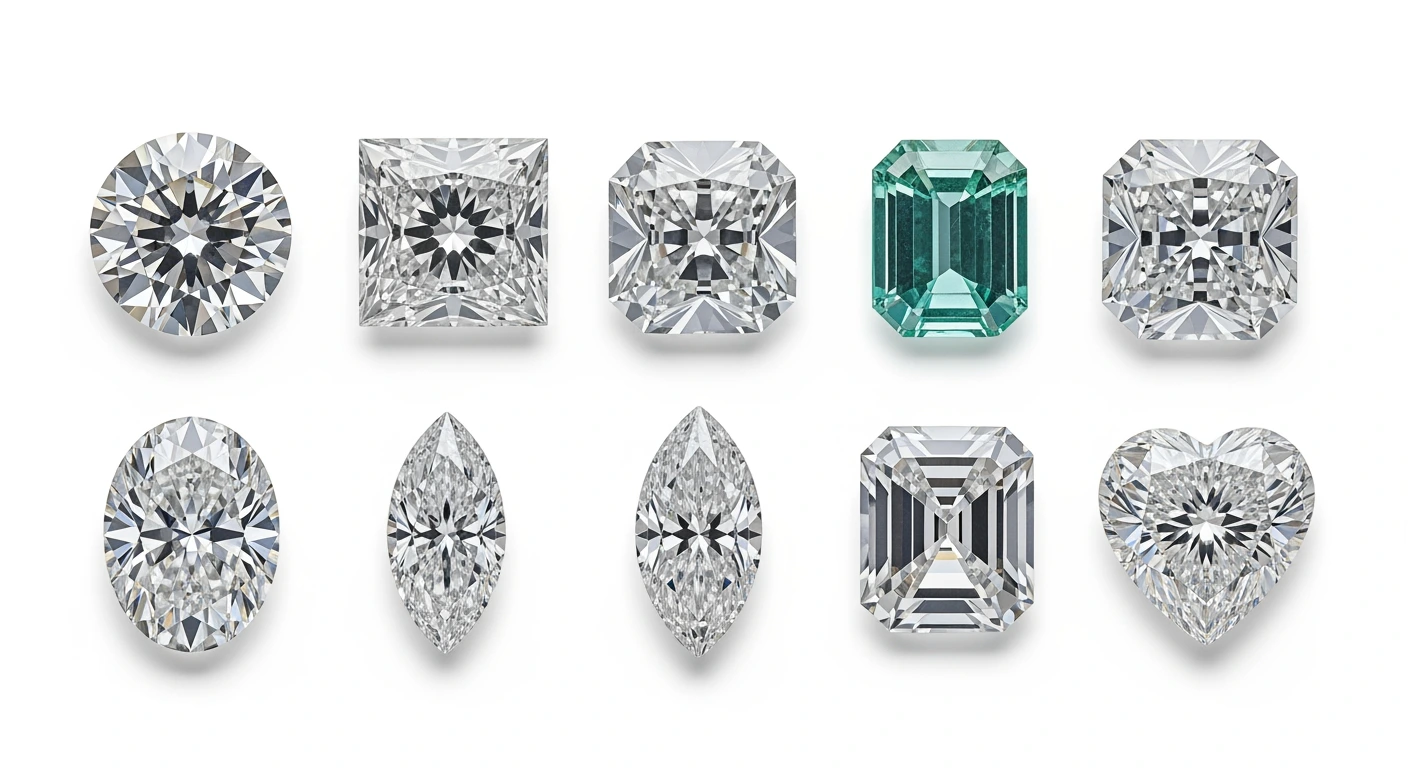
Diamond shape dramatically affects how large a stone appears at any given carat weight. The key metric is face-up surface area relative to carat weight — elongated shapes spread their mass across a larger visible area.
Shapes that appear larger per carat: Oval (10-15% larger face-up than equivalent round), marquise (the longest face-up area of any shape), and pear (elongated with a tapered point that extends perceived size).
Shapes that appear similar to round: Cushion (slightly larger face-up in elongated versions), radiant (similar to cushion), and princess (square format, similar face-up area to round).
Shapes that can appear smaller per carat: Emerald and Asscher cuts have step-cut faceting and typically deeper pavilions, meaning more weight is distributed vertically. An emerald cut 1 carat may appear smaller face-up than a round brilliant 1 carat, though the step-cut’s open table shows clarity more prominently.
Diamond Color: What Different Grades Actually Look Like
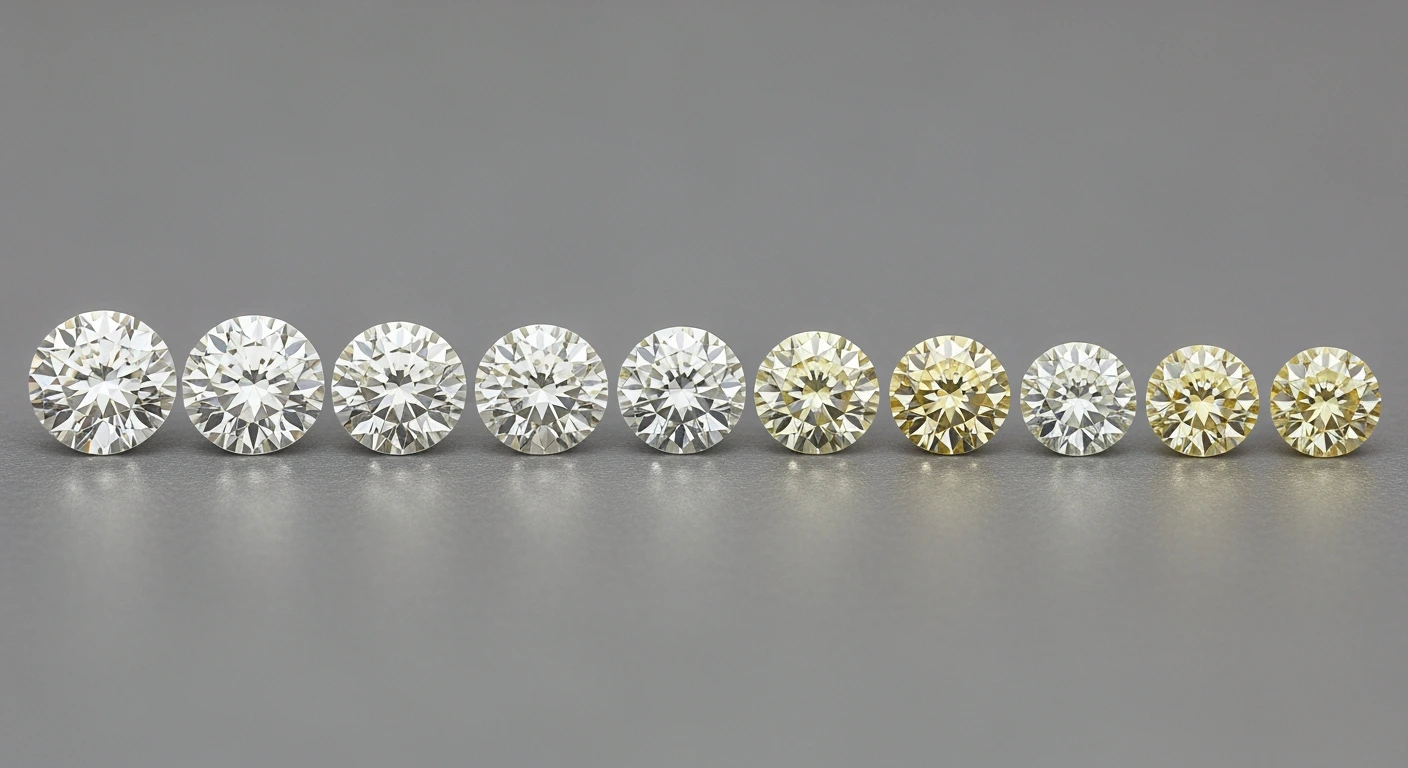
The GIA diamond color scale runs from D (completely colorless) to Z (light yellow or brown). In practice, the differences between adjacent grades are remarkably subtle — the distinction between a D and an F diamond is essentially invisible without side-by-side gemological comparison. Color becomes noticeable to most people around the J to K range, where a warm tint is visible in certain lighting conditions.
The value implication: A D color 1 carat diamond commands a significant premium over a G color stone of identical cut, clarity, and carat weight — often 20-40% more. For borrowers considering a collateral loan against a diamond, the combination of carat weight, color grade, and clarity grade determines the stone’s market value and consequently the loan amount available.
What Determines a Diamond’s Collateral Loan Value?
When you borrow against a diamond through Borro, the loan amount is based on the diamond’s current wholesale market value — determined by the Four Cs (carat, color, clarity, cut), certification (GIA-certified diamonds command higher values than uncertified), fluorescence (strong fluorescence reduces value in higher color grades), and current market conditions for that specific combination of attributes.
Diamonds above 2 carats with strong specifications (D-G color, IF-VS2 clarity, Excellent/Very Good cut, GIA certified) represent the strongest collateral positions. The diamond remains in Borro’s secure, insured custody during the loan term and is returned in its original condition upon repayment.
Considering a loan against your diamond? Learn how Borro’s diamond collateral loan process works — from free appraisal through funded loan in as little as 24 hours.